Volumme of a sphere of "heavy" metals 5Km O.D. The smallest size postulated
that I could find. The size varries between 5 and 80Km. in the search that I
made. 2500M^3 x Pie x 4/3 = 6.5^10 M^3
Density? Since the pressure at the center of the Earth's core should be many
times the pressure of a nuclear bomb's implosion and that routeenly results
in compression factors of more than 40. I have used 20 as a density
multiplier.
Explosive pressure.= <31,000Kg./Cm^2! After inertial multiplier
3^8Kg./Cm^2. (IIRC)
Mass of Earth above every square centimeter of the "heavy" core =
R.=250,000Cm.^2 x 3.14159 = 1.963Cm.^2 = surface aria of 5Km sphere.
Mass of planet. = 5.974^24Kg. / 1.963^11 Cm^2 = >3.0^13Kg./Cm^2
The above makes a compression factor of 20 seem reasonable to me. That makes
every cubic meter of core mass 379 metric tons.
Volume of 5Km. sphere. = 2,500M.^3 x 3.14159 x 4 / 3 = 6.5^10M.^3 x 18.95 x
20 = 2.464^13 metric tons, or 2.464^16 Kg.
At 50% efficiancy, a number easily acheaved by modern weapons that are not
tamped by the inertia of 6^24 tones of planet and a many kilometer thick
secondary fisile shell for a increased yeald, both things that increase
yealds dramaticaly. That makes 1.09^30 Joules, more than enough to acount
for the effects as seen on film.
(2.464^16 x 8.9^13 J/Kg.)/2 = 1.09^30
If any of these very conservitave assumptions are too low, then the number
gets very much bigger very quickly. if the fissile core is ~8Km. instead of
five, or the efficiancy goes up because of the tamping, or because of the
high nutron flux to start, for instance. The first nuclear explosion was
started by only 3-8 nutrons, average guess <5, according to some sources.
The U-238 decay series is U-238, 4,500,000,000 YEARS, TO, Th-234, 24 days
toPa-234,2.1 min, to u-234, 250,000 years, to Th-230,80,000 years, toRa-226,
1,600 years to, Rn-222, 3.82 days, to Po-218, 3.05 min, to Pb-214, 26.8 min,
to Bi-214, 19.7 min, to Po-214, 16 mS, toPb-210 22 years, toBi-210, 5 days,
toPo-210, 138 days to Lead, Pb-206 all of which are less dense than U-238
and Pu-239 and would surround the pit as it decays. Every single element on
that list will fission when struck by a fast nutron and act to boost the
yeald when struck by that ever elusive "fast" nutron that is a minor, 17%,
byproduct of the fission reaction. If any of those elements were more
effective that the initial statements above, the total yeald could easily go
to 1^31J to 2^32J.
The energy required to supply the origional nutron flux, sufficiant to
fission the entire core, could be miniscuel in compairison, say 2^18J to
4.5^19J. ( A 20-1 ratio of nutron energy depending on whos book you read.One
metric ton of nutrons accellerated to fast nutron energies instead of the
socalled slow "thermal" nutrons used for conventional nuclear explosives.
Remember that almost anything will fission when struck by fast nutrons.
Given that the chain reactions will not be self sustaining, a very large
imput will be required to ensure that enough of the pile is fissioned so
that the 17% of fast nutrons liberated will eventialy fission the entire pit
as the reaction dies down. About three generations to fission an additional
21% beyond the origionaly targeted core.
Stewie has sent more calculations!
Moderator: Vympel
-
Straha
- Lord of the Spam
- Posts: 8198
- Joined: 2002-07-21 11:59pm
- Location: NYC
Stewie has sent more calculations!
When I asked him for his planet causing the boom calcs he sent me this. I make no claims to the actual science in the thingy, nor did I fake this or change this in anyway from the E-mail sent to me.
'After 9/11, it was "You're with us or your with the terrorists." Now its "You're with Straha or you support racism."' ' - The Romulan Republic
'You're a bully putting on an air of civility while saying that everything western and/or capitalistic must be bad, and a lot of other posters (loomer, Stas Bush, Gandalf) are also going along with it for their own personal reasons (Stas in particular is looking through rose colored glasses)' - Darth Yan
'You're a bully putting on an air of civility while saying that everything western and/or capitalistic must be bad, and a lot of other posters (loomer, Stas Bush, Gandalf) are also going along with it for their own personal reasons (Stas in particular is looking through rose colored glasses)' - Darth Yan
-
Dark Hellion

- Permanent n00b
- Posts: 3559
- Joined: 2002-08-25 07:56pm
-
Darth Wong

- Sith Lord

- Posts: 70028
- Joined: 2002-07-03 12:25am
- Location: Toronto, Canada
- Contact:
That's hilarious. Especially the part where he says that 1E30 J is "more than enough to account for the effects seen on film", and says that the energy necessary to create the neutron flux found inside a thermonuclear weapon throughout the entire volume of a multi-kilometre wide sphere buried under 6000km of rock could very well be "miniscule" 

"you guys are fascinated with the use of those "rules of logic" to the extent that you don't really want to discussus anything."- GC
"I do not believe Russian Roulette is a stupid act" - Embracer of Darkness
"Viagra commercials appear to save lives" - tharkûn on US health care.
http://www.stardestroyer.net/Mike/RantMode/Blurbs.html
-
Master of Ossus

- Darkest Knight
- Posts: 18213
- Joined: 2002-07-11 01:35am
- Location: California
So, now that he sent his calcs are you going to let him back in?Darth Wong wrote:That's hilarious. Especially the part where he says that 1E30 J is "more than enough to account for the effects seen on film", and says that the energy necessary to create the neutron flux found inside a thermonuclear weapon throughout the entire volume of a multi-kilometre wide sphere buried under 6000km of rock could very well be "miniscule"
Granted, his calculations are LAUGHABLY horrible, and I LOVED the part when he claims that 1.09^30 Joules is more than enough to acount
for the effects as seen on film, but he DID send in his "calcs." So, is he coming back?
"Sometimes I think you WANT us to fail." "Shut up, just shut up!" -Two Guys from Kabul
Latinum Star Recipient; Hacker's Cross Award Winner
"one soler flar can vapririze the planit or malt the nickl in lass than millasacit" -Bagara1000
"Happiness is just a Flaming Moe away."
Latinum Star Recipient; Hacker's Cross Award Winner
"one soler flar can vapririze the planit or malt the nickl in lass than millasacit" -Bagara1000
"Happiness is just a Flaming Moe away."
-
Straha
- Lord of the Spam
- Posts: 8198
- Joined: 2002-07-21 11:59pm
- Location: NYC
That'd be wonderful, he sent the calcs like you asked (though some explanation was needed about what set of calcs were needed) so let him back to defend the accusations against them.Master of Ossus wrote:So, now that he sent his calcs are you going to let him back in?Darth Wong wrote:That's hilarious. Especially the part where he says that 1E30 J is "more than enough to account for the effects seen on film", and says that the energy necessary to create the neutron flux found inside a thermonuclear weapon throughout the entire volume of a multi-kilometre wide sphere buried under 6000km of rock could very well be "miniscule"
Granted, his calculations are LAUGHABLY horrible, and I LOVED the part when he claims that 1.09^30 Joules is more than enough to acount
for the effects as seen on film, but he DID send in his "calcs." So, is he coming back?
'After 9/11, it was "You're with us or your with the terrorists." Now its "You're with Straha or you support racism."' ' - The Romulan Republic
'You're a bully putting on an air of civility while saying that everything western and/or capitalistic must be bad, and a lot of other posters (loomer, Stas Bush, Gandalf) are also going along with it for their own personal reasons (Stas in particular is looking through rose colored glasses)' - Darth Yan
'You're a bully putting on an air of civility while saying that everything western and/or capitalistic must be bad, and a lot of other posters (loomer, Stas Bush, Gandalf) are also going along with it for their own personal reasons (Stas in particular is looking through rose colored glasses)' - Darth Yan
-
AdmiralKanos

- Lex Animata
- Posts: 2649
- Joined: 2002-07-02 11:36pm
- Location: Toronto, Ontario
Actually, he didn't send the calcs at all. I even specifically warned him NOT to send calcs which simply assume that the material reacts.
I demanded that he produce his calcs to show how much energy it would take to actually saturate a sphere at Earth's core with that kind of neutron flux, clear through the overlaying mantle and crust, before blowing apart the core due to heat buildup from neutron scattering.
Without that, none of the above happens and all of the calcs are nothing more than bullshit-wank. It was totally predictable that he would completely ignore the demand and simply repeat his earlier bullshit assumption that the reaction will happen and that he can evade the demand to show feasibility by simply mumbling some vague trivia about neutrons.
I demanded that he produce his calcs to show how much energy it would take to actually saturate a sphere at Earth's core with that kind of neutron flux, clear through the overlaying mantle and crust, before blowing apart the core due to heat buildup from neutron scattering.
Without that, none of the above happens and all of the calcs are nothing more than bullshit-wank. It was totally predictable that he would completely ignore the demand and simply repeat his earlier bullshit assumption that the reaction will happen and that he can evade the demand to show feasibility by simply mumbling some vague trivia about neutrons.
For a time, I considered sparing your wretched little planet Cybertron.
But now, you shall witnesss ... its dismemberment!
"This is what happens when you use trivia napkins for research material"- Sea Skimmer on "Pearl Harbour".
"Do you work out? Your hands are so strong! Especially the right one!"- spoken to Bud Bundy
But now, you shall witnesss ... its dismemberment!
"This is what happens when you use trivia napkins for research material"- Sea Skimmer on "Pearl Harbour".
"Do you work out? Your hands are so strong! Especially the right one!"- spoken to Bud Bundy
-
The Dude

- Jedi Knight
- Posts: 665
- Joined: 2002-09-15 10:37am
- Location: Toronto
My favourite part is his assumption that uranium at the Earth's core will have a density of almost 400 g/cc. Curiously, no geologist has ever advocated such a ludicrous densification of the Earth's metallic core.
I also like the calculation of pressure in Kg/cm^3
Also classic is his claim that 5 km is the "smallest size postulated"; like they lying little fuck he is, Stewie fails to mention that HE is the only one who has ever postulated a larger size than that!
I also like the calculation of pressure in Kg/cm^3
Also classic is his claim that 5 km is the "smallest size postulated"; like they lying little fuck he is, Stewie fails to mention that HE is the only one who has ever postulated a larger size than that!
-
Cej4096

- Youngling
- Posts: 111
- Joined: 2002-11-20 12:57pm
Re: Stewie has sent more calculations!
I thought that in his previous calculations he conceded (though of course not putting it that way) that the 1E38 figure was correct.That makes 1.09^30 Joules, more than enough to acount
for the effects as seen on film.

-
Darth Wong
- Sith Lord
- Posts: 70028
- Joined: 2002-07-03 12:25am
- Location: Toronto, Canada
- Contact:
Re: Stewie has sent more calculations!
He used that figure in order to "prove" that the Death Star's power output was impossibly high for DET, while simultaneously claiming that the true figure is actually much lower for his own magical easily-ignited super-fission reaction. Really, one could go blind trying to catalogue all of the multi-layered fallacies and self-contradictions in his arguments.Cej4096 wrote:I thought that in his previous calculations he conceded (though of course not putting it that way) that the 1E38 figure was correct.That makes 1.09^30 Joules, more than enough to acount
for the effects as seen on film.
"you guys are fascinated with the use of those "rules of logic" to the extent that you don't really want to discussus anything."- GC
"I do not believe Russian Roulette is a stupid act" - Embracer of Darkness
"Viagra commercials appear to save lives" - tharkûn on US health care.
http://www.stardestroyer.net/Mike/RantMode/Blurbs.html
-
muse

- Jedi Council Member
- Posts: 1841
- Joined: 2003-11-26 07:04pm
Translation: My name is Stewie, I pulled some numbers out of my butt and punched them into a calculator, therefore I am right!
I swear to god this guy needs to be carted off to the nearest mental institution and heavily medicated.
I swear to god this guy needs to be carted off to the nearest mental institution and heavily medicated.
ø¤ º°`°º¤ø,¸¸,ø¤º°`°º¤ø,¸¸¸,ø¤º°`°º¤ø,¸¸,ø
Quidquid latine dictum sit, altum viditur.
(Whatever is said in Latin sounds profound.)
I like Celine Dion myself. Her ballads alone....they make me go all teary-eyed and shit.
- Havok
Quidquid latine dictum sit, altum viditur.
(Whatever is said in Latin sounds profound.)
I like Celine Dion myself. Her ballads alone....they make me go all teary-eyed and shit.
- Havok
-
General Zod

- Never Shuts Up
- Posts: 29211
- Joined: 2003-11-18 03:08pm
- Location: The Clearance Rack
- Contact:
remember that one pic he sent that was supposed to have been him standing outside a big wooden building? how do we know that wasn't an institution that he's been posting from as it is? it would certainly explain alot of things.muse wrote:Translation: My name is Stewie, I pulled some numbers out of my butt and punched them into a calculator, therefore I am right!
I swear to god this guy needs to be carted off to the nearest mental institution and heavily medicated.
"It's you Americans. There's something about nipples you hate. If this were Germany, we'd be romping around naked on the stage here."
-
AdmiralKanos
- Lex Animata
- Posts: 2649
- Joined: 2002-07-02 11:36pm
- Location: Toronto, Ontario
He sent two new messages:
And he soon sent another message when I ignored that obvious delay tactic:
I see he was either too blind or stupid to read the half-dozen times I explained what calculations I wanted when he was here, so he feels he can simply pretend that I never explained. He seems to be one of those people who acts as though there's no permanent record of past conversations, so he can just bullshit his way through stuff like this.Stewart Davies wrote:What calculations? To what question?
I have asked this before and can not remember getting an answer then either.
And he soon sent another message when I ignored that obvious delay tactic:
Gee, it's so difficult to tell he's been kneeling at the altar of Darkstar, isn't it? All that rhetoric, so little substance. So I responded thusly:Stewart Davies wrote:No answer to my last message, I've met your demands, posted the formulas and sent the photos, why are you afaid of me? Reenstate my access to post to defend my possition and continue the debate, or admit your own intelectual cowardice.
Darth Wong wrote:You're full of shit, Stewart. You did NOT meet my demands, moron. Let me quote the demand I made on March 23:
"YOU HAVE CLAIMED THAT YOUR ALTERNATE THEORY IS FEASIBLE. THIS MEANS YOU SHOULD BE ABLE TO PRODUCE CALCULATIONS SHOWING THIS TO BE THE CASE, OTHERWISE YOU HAVE BEEN LYING THE WHOLE TIME AND YOU ACTUALLY HAVE NO IDEA WHETHER IT IS FEASIBLE OR EVEN SCIENTIFICALLY POSSIBLE."
And what did you do? You sent calculations which ASSUMED that the reaction was feasible, made no effort whatsoever to show that it could be made to occur, and calculated (very sloppily) what would happen once we grant your assumption that the reaction will occur. Where is your calculation for neutron beam velocity and density, Stewart? Where is your calculation for mean free path through solid matter, Stewart? Where is your calculation for the total energy of a beam which will punch through 6000 km of rock and mantle and iron without appreciable neutron scattering, Stewart? Where is your calculation for the energy of a beam which can saturate an entire 80km wide sphere of uranium (or for that matter, a 1km wide sphere of uranium) with neutrons at such density that you will achieve 100% neutron capture, Stewart? Where is your calculation for the maximum delta-t over which this process can occur so that heat expansion from neutron scattering will not blow up the planet first, Stewart? Where is your calculation showing that you can make a planet expand at more than ten thousand km/s with less than 1% of the energy required to overcome gravitational binding energy, Stewart?
You have produced NONE of it, you overblown windbag, and you never will, because none of it works. The fact that you can't even TRY merely proves how utterly incompetent you are, and how vastly overblown your claims of technical expertise are. And your picture is a joke. It only shows that a white ball can be a little brighter when illuminated at close range by a flash, and falls so far, far short of your claims that most of the people on the board didn't even realize what the picture was for. I fully intend to show it on my website as an example of what an imbecile you are.
So you think I'm a "coward" for not taking your worthless incompetent irrelevant calculations seriously or accepting them in lieu of the FEASIBILITY calculations which I demanded, eh? You seem to think that this empty posturing of yours will change my mind; let me assure you that it will only earn you a more prominent spot on my Hate Mail page in my next update.
For a time, I considered sparing your wretched little planet Cybertron.
But now, you shall witnesss ... its dismemberment!
"This is what happens when you use trivia napkins for research material"- Sea Skimmer on "Pearl Harbour".
"Do you work out? Your hands are so strong! Especially the right one!"- spoken to Bud Bundy
But now, you shall witnesss ... its dismemberment!
"This is what happens when you use trivia napkins for research material"- Sea Skimmer on "Pearl Harbour".
"Do you work out? Your hands are so strong! Especially the right one!"- spoken to Bud Bundy
-
AdmiralKanos
- Lex Animata
- Posts: 2649
- Joined: 2002-07-02 11:36pm
- Location: Toronto, Ontario
BTW, here are the pictures he sent:


The picture appears to be a baseball (note: already white) which is illuminated by a flash and looks blurry when he uses a slow shutter speed. In his crack-addled mind, this somehow proves that the following sequence could have occurred without heating:
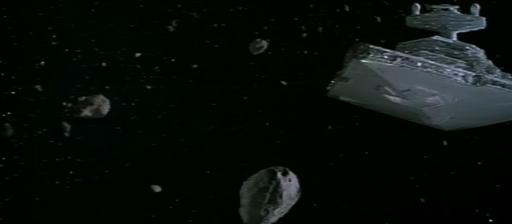
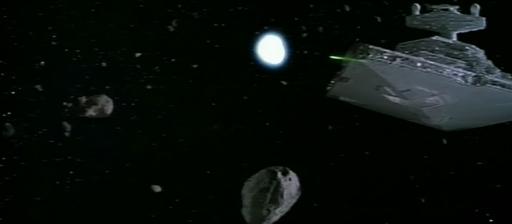
Sad, isn't it?
The picture appears to be a baseball (note: already white) which is illuminated by a flash and looks blurry when he uses a slow shutter speed. In his crack-addled mind, this somehow proves that the following sequence could have occurred without heating:
Sad, isn't it?
For a time, I considered sparing your wretched little planet Cybertron.
But now, you shall witnesss ... its dismemberment!
"This is what happens when you use trivia napkins for research material"- Sea Skimmer on "Pearl Harbour".
"Do you work out? Your hands are so strong! Especially the right one!"- spoken to Bud Bundy
But now, you shall witnesss ... its dismemberment!
"This is what happens when you use trivia napkins for research material"- Sea Skimmer on "Pearl Harbour".
"Do you work out? Your hands are so strong! Especially the right one!"- spoken to Bud Bundy
-
AdmiralKanos
- Lex Animata
- Posts: 2649
- Joined: 2002-07-02 11:36pm
- Location: Toronto, Ontario
Moved to publicly visible forum so Stewart can see how little we think of his so-called "calculations".
PS. I like the way he thinks that Pi is actually "pie", like the stuff you eat.
PS. I like the way he thinks that Pi is actually "pie", like the stuff you eat.
For a time, I considered sparing your wretched little planet Cybertron.
But now, you shall witnesss ... its dismemberment!
"This is what happens when you use trivia napkins for research material"- Sea Skimmer on "Pearl Harbour".
"Do you work out? Your hands are so strong! Especially the right one!"- spoken to Bud Bundy
But now, you shall witnesss ... its dismemberment!
"This is what happens when you use trivia napkins for research material"- Sea Skimmer on "Pearl Harbour".
"Do you work out? Your hands are so strong! Especially the right one!"- spoken to Bud Bundy
-
Spanky The Dolphin
- Mammy Two-Shoes
- Posts: 30776
- Joined: 2002-07-05 05:45pm
- Location: Reykjavík, Iceland (not really)
I think I know what photo-light principle he's trying to apply. Unfortunately for him, he's not applying it correctly, and still has no idea what the hell he's talking about.

I believe in a sign of Zeta.
[BOTM|WG|JL|Mecha Maniacs|Pax Cybertronia|Veteran of the Psychic Wars|Eva Expert]
"And besides, who cares if a monster destroys Australia?"
-
Darth Wong
- Sith Lord
- Posts: 70028
- Joined: 2002-07-03 12:25am
- Location: Toronto, Canada
- Contact:
Anyone can wash out a piece of film by overexposing it. Does he really think this has anything to do with a piece of film which is obviously not overexposed, judging by everything else in the frame and in every frame before and after?Spanky The Dolphin wrote:I think I know what photo-light principle he's trying to apply. Unfortunately for him, he's not applying it correctly, and still has no idea what the hell he's talking about.
Unfortunately, he probably does. I like the way he triumphantly E-mailed me saying that he had met all of the requirements. The saddest thing is that I suspect he really does think he did meet the requirements. I think he actually believes those laughable calculations successfully proved the feasibility of his magical Alderaan-bomb theory, and that those pictures really do look just like the asteroid vape sequence.
"you guys are fascinated with the use of those "rules of logic" to the extent that you don't really want to discussus anything."- GC
"I do not believe Russian Roulette is a stupid act" - Embracer of Darkness
"Viagra commercials appear to save lives" - tharkûn on US health care.
http://www.stardestroyer.net/Mike/RantMode/Blurbs.html
-
Patrick Degan

- Emperor's Hand
- Posts: 14847
- Joined: 2002-07-15 08:06am
- Location: Orleanian in exile
Hmm...
(examines Stewpid's e-mail)
BWA-HA HA HA HA HA HA HA HA HA HA HA HA HA HA HA HA HA HA HA HA HA HA HA HA HA HA HA HA HA HA HA HA HA HA HA HA HA HA HA HA HA HA HA HA HA HA HA HA HA HA HA HA HA HA HA HA HA HA HA HA HA HA HA HA HA HA HA HA HA HA HA HA HA HA HA HA HA HA HA HA HA HA HA HA HA HA HA HA HA HA HA HA HA HA HA HA HA HA HA HA HA HA HA HA HA HA HA HA HA HA HA HA HA HA HA HA HA HA HA HA HA HA HA HA HA HA HA HA HA HA HA HA HA HA HA HA HA HA HA HA HA HA HA HA HA HA HA HA HA HA HA HA HA HA HA HA HA HA HA HA HA HA HA HA HA HA HA HA HA HA HA
(examines Stewpid's e-mail)
BWA-HA HA HA HA HA HA HA HA HA HA HA HA HA HA HA HA HA HA HA HA HA HA HA HA HA HA HA HA HA HA HA HA HA HA HA HA HA HA HA HA HA HA HA HA HA HA HA HA HA HA HA HA HA HA HA HA HA HA HA HA HA HA HA HA HA HA HA HA HA HA HA HA HA HA HA HA HA HA HA HA HA HA HA HA HA HA HA HA HA HA HA HA HA HA HA HA HA HA HA HA HA HA HA HA HA HA HA HA HA HA HA HA HA HA HA HA HA HA HA HA HA HA HA HA HA HA HA HA HA HA HA HA HA HA HA HA HA HA HA HA HA HA HA HA HA HA HA HA HA HA HA HA HA HA HA HA HA HA HA HA HA HA HA HA HA HA HA HA HA HA HA
When ballots have fairly and constitutionally decided, there can be no successful appeal back to bullets.
—Abraham Lincoln
People pray so that God won't crush them like bugs.
—Dr. Gregory House
Oil an emergency?! It's about time, Brigadier, that the leaders of this planet of yours realised that to remain dependent upon a mineral slime simply doesn't make sense.
—The Doctor "Terror Of The Zygons" (1975)
—Abraham Lincoln
People pray so that God won't crush them like bugs.
—Dr. Gregory House
Oil an emergency?! It's about time, Brigadier, that the leaders of this planet of yours realised that to remain dependent upon a mineral slime simply doesn't make sense.
—The Doctor "Terror Of The Zygons" (1975)
-
Kamakazie Sith

- Emperor's Hand
- Posts: 7555
- Joined: 2002-07-03 05:00pm
- Location: Salt Lake City, Utah
Please tell me you're joking....AdmiralKanos wrote:Moved to publicly visible forum so Stewart can see how little we think of his so-called "calculations".
PS. I like the way he thinks that Pi is actually "pie", like the stuff you eat.
Please tell me he wasn't being serious....
Milites Astrum Exterminans
-
Master of Ossus
- Darkest Knight
- Posts: 18213
- Joined: 2002-07-11 01:35am
- Location: California
How can he not realize that a piece of over-exposed film against a dark background will NECESSARILY make a light object lighter, just because the film will have absorbed more light from that area? What possible explanation can he have for the ISD in the background not glowing like a lightbulb if an asteroid can do the same thing, and the color was caused only by the overexposure?
"Sometimes I think you WANT us to fail." "Shut up, just shut up!" -Two Guys from Kabul
Latinum Star Recipient; Hacker's Cross Award Winner
"one soler flar can vapririze the planit or malt the nickl in lass than millasacit" -Bagara1000
"Happiness is just a Flaming Moe away."
Latinum Star Recipient; Hacker's Cross Award Winner
"one soler flar can vapririze the planit or malt the nickl in lass than millasacit" -Bagara1000
"Happiness is just a Flaming Moe away."
-
Coalition

- Jedi Master
- Posts: 1237
- Joined: 2002-09-13 11:46am
- Contact:
Maybe he thought the Star Destroyer was supposed to be very dark in that specific frame (unlike the others before and after), and that Lucas deliberately overexposed the frame so the Star Destroyer could be the correct shade. The result of that was that the asteroid became much brighter.
Or.
Ah frell it. Even I can't think along those lines and make up enough BS to justify that.
Or.
Ah frell it. Even I can't think along those lines and make up enough BS to justify that.
-
General Zod
- Never Shuts Up
- Posts: 29211
- Joined: 2003-11-18 03:08pm
- Location: The Clearance Rack
- Contact:
read the calculations Straha posted. stewie actually says pie. found it incredibly amusing myself. fuck, any half competent high school student would know what the proper label for Pi is when used mathematically.Kamakazie Sith wrote:Please tell me you're joking....AdmiralKanos wrote:Moved to publicly visible forum so Stewart can see how little we think of his so-called "calculations".
PS. I like the way he thinks that Pi is actually "pie", like the stuff you eat.
Please tell me he wasn't being serious....
"It's you Americans. There's something about nipples you hate. If this were Germany, we'd be romping around naked on the stage here."
-
aerius

- Charismatic Cult Leader
- Posts: 14822
- Joined: 2002-08-18 07:27pm
"Remember kids, pies are square!"Darth_Zod wrote:stewie actually says pie. found it incredibly amusing myself. fuck, any half competent high school student would know what the proper label for Pi is when used mathematically.
"no they're not! Pies are round!"
That was so far back I can't even remember what grade it was, probably middle school.


Lusankya: Deal!
Say, do you want it to be a threesome with your wife? Or a foursome with your wife and sister-in-law? I'm up for either.

-
Lord Poe

- Sith Apprentice
- Posts: 6988
- Joined: 2002-07-14 03:15am
- Location: Callyfornia
- Contact:


-
RedImperator

- Roosevelt Republican
- Posts: 16465
- Joined: 2002-07-11 07:59pm
- Location: Delaware
- Contact:
I thought his theory was that the ISD's targeting radars were so powerful they were causing the surface of the asteroid to fluoresce. I don't understand how overexposing a picture of a baseball proves that, and I don't see how having radars so powerful that they can make asteroids glow weakens the Empire, but whatever.

X-Ray Blues
-
harbringer

- Padawan Learner
- Posts: 479
- Joined: 2003-12-01 09:02am
- Location: Outreach - Lyran Alliance
- Contact:
Spew believes that the impact of the energy bolt from the turbolaser or the escaping vapour dislodges dust (like talcum powder no less) from the asteroid. I never saw him claim it was targeting radars (though he wrote so much s*** I stopped reading it by the end). Course I say he was being conservative  - the energy released by the turbolaser not only moved the dust coating the asteroid it vapourised it.
As for his garbage about Alderaan <shrugs> since it still needs much the same power output (you have to vape all the rock from the surface to the core in less than a second after all) that Mike has on his page. I really don't see why he bothered with the theory - after all it isn't like a un-shielded planet like the Federations Earth will survive anyhow.
As for anyone who actually thinks RSA is right they are too gullible/naive to work in any government department let alone "black" research projects.
Lastly really the whole argument about his spelling is getting boring. After all he may just not care about it like some people do. Note I am not saying you don't get to mock him just find something more interesting .
- the energy released by the turbolaser not only moved the dust coating the asteroid it vapourised it. As for his garbage about Alderaan <shrugs> since it still needs much the same power output (you have to vape all the rock from the surface to the core in less than a second after all) that Mike has on his page. I really don't see why he bothered with the theory - after all it isn't like a un-shielded planet like the Federations Earth will survive anyhow.
As for anyone who actually thinks RSA is right they are too gullible/naive to work in any government department let alone "black" research projects.
Lastly really the whole argument about his spelling is getting boring. After all he may just not care about it like some people do. Note I am not saying you don't get to mock him just find something more interesting
."Depending on who you talk to, a mercenary can be anything from a savior to the scum of the universe. On the Wolf's Dragoons world of Outreach, the Mercenary's Star, we know what a merc really is - a business man." - Wolf's Dragoons, Outreach (Merc World mag. 3056)