1913 what if: Europe vs USA

OT: anything goes!

Moderator: Edi

Post Reply

What Happens?

The USA falls completely
4
11%
USA repels the invaders
13
34%
Stalemate/armed peace, Europe comes out stronger
8
21%
Stalemate/armed peace, USA comes out stronger
6
16%
Stalemate, no clear winner
7
18%
 
Total votes: 38

CC
Youngling
Posts: 144
Joined: 2005-08-10 02:54pm

Post by CC »

You might be getting a delay with minefields and defenses, but eventually you'll be overcome. Europe's mobilizational capabilities at the time far exceed your own.
The only way that Europe will be overcoming American harbor defenses is by sending every ship they can under the premise "Every ship can be a minesweeper, once." Assuming that the Americans have not already sunk blockships and that those ships don't become blockships, they might actually succeed in forcing their way into one harbor. That will be the extent of it, at the cost of the majority of their combined navies.

Look, each major American harbor will be more heavily defended, both in absolute terms and in reference to the amount of area, than the Dardanelles were. The British and French weren't able to force them. It's rather doubtful they'll be able to force an American harbor.
The fact is that American mobilization remained uneffective for the first year or so of the war, and that they lacked some key arms. Which means bad things really in case the British actually create an industrial base for invasion supply in Canada.
And building up that infrastructure will require at least as much time as it takes for America to mobilize. Neither Canada nor Mexico has the infrastructure to support a large army (or the deployment of very many ships), without serious and lengthy work, and Mexico's eastern ports are likely to be completely unavailable due to America mining off the Gulf of Mexico.
What? Britain was more than capable of producing the centimetric radar on it's own. But anyway, as you're persistent in your claims that the US somehow gets all the cool shit technologies by the WWII period, I'll quote some of my PM-correspondence where I adress that claim exactly:
I've never said that they would get it, or even that it is relevant. While centimetric radar makes VT shells feasible, and night fighters easier, it's not actually needed for American requirements in such a second war. Not to mention that it's entirely plausible that the US could develop it on its own given its revanche nature in this timeline.
I'd say it would be more useful to blast the ports. Mining the ports and maintaining a naval blockade of the United States is also a good idea. Given Europe's total and unquestioned naval supremacy, I'm pretty sure they could maintain it.
Again, getting through to blast the ports is not going to happen. There's simply too strong of an available defense.
That is actually quite possible. Philadelphia and Norfolk are too important to just let them be. They must be destroyed one way or other.
It's not possible. Interior lines of movement and communication are too good for the United States. Within a day or two, any landing will be opposed by over a hundred thousand regulars and their equipment. Not to mention the general infeasibility of any Gallipoli against the US coast. Again, if the British can be stopped by the Turks, the US is practically guaranteed to route them.

And isn't Philadelphia rather a ways away from the coast?

User avatar
Setesh
Jedi Master
Posts: 1113
Joined: 2002-07-16 03:27pm
Location: Maine, land of the Laidback
Contact:

Post by Setesh »

CC wrote:It's not possible. Interior lines of movement and communication are too good for the United States. Within a day or two, any landing will be opposed by over a hundred thousand regulars and their equipment. Not to mention the general infeasibility of any Gallipoli against the US coast. Again, if the British can be stopped by the Turks, the US is practically guaranteed to route them.

And isn't Philadelphia rather a ways away from the coast?

100000 regulars probably no, more like 20000 regulars and 50000 militiamen on most harbors. That's why I told Shep my town was the easiest to assault. Portland Maine is not exactly populous. But assuming they could get past the overlapping fire from the three forts that guard the harbor. Most of the bay had (and in some places still has) tree cover right to the waterline. And Maine was (and is) full of armed people who hunt regularly. After the attrition of the Forts (especially since the Islands make narrow channels they would have to pass through) the death toll from civilian sniper fire would be absurd.

Not that the overland route through mostly untamed wilderness on dirt roads if any roads at all would be a picnic either. In Maine's longer (and at the time harsher) winter months it would be an epic death trap. In summer the black flies and mosquitoes would drive them insane almost as much as the random guerrilla strikes.

Philly is not on the coast but it is on the Delaware River which can handle deepwater craft.
Wiki wrote:In the "project of 1885" the United States government undertook systematically the formation of a 26 ft (8 m) channel 600 ft (180 m) wide from Philadelphia to deep water in Delaware Bay. The River and Harbor Act of 1899 provided for a 30 foot (9 m) channel 600 feet (180 m) wide from Philadelphia to the deep water of the bay.
The increased size of the channel was completed in 1905, Granted a hostile force moving up the Delaware is begging to die.
"Nobody ever inferred from the multiple infirmities of Windows that Bill Gates was infinitely benevolent, omniscient, and able to fix everything. " Argument against god's perfection.

My Snow's art portfolio.
User avatar
K. A. Pital
Glamorous Commie
Posts: 20814
Joined: 2003-02-26 11:39am
Location: Elysium

Post by K. A. Pital »

Interior lines of movement and communication are too good for the United States. Within a day or two, any landing will be opposed by over a hundred thousand regulars and their equipment.
100,000? In a day or two? I see no reason to discuss this any further, your grasp of WWI-level tactical logistics is abysmal. Nevermind the time US would need to mobilize 100,000, moving 100,000 from city to city in one day is not an ordinary feat even by WWII standards. In WWI, such advance tempos are even less common.
Lì ci sono chiese, macerie, moschee e questure, lì frontiere, prezzi inaccessibile e freddure
Lì paludi, minacce, cecchini coi fucili, documenti, file notturne e clandestini
Qui incontri, lotte, passi sincronizzati, colori, capannelli non autorizzati,
Uccelli migratori, reti, informazioni, piazze di Tutti i like pazze di passioni...

...La tranquillità è importante ma la libertà è tutto!
Assalti Frontali
CC
Youngling
Posts: 144
Joined: 2005-08-10 02:54pm

Post by CC »

Stas Bush wrote:
Interior lines of movement and communication are too good for the United States. Within a day or two, any landing will be opposed by over a hundred thousand regulars and their equipment.
100,000? In a day or two? I see no reason to discuss this any further, your grasp of WWI-level tactical logistics is abysmal.
Should be quite doable, especially if a ready force has been prepositioned in various areas to react to a landing. During the American Civil War, we managed, without prior preparation, to transfer two Army corps from Virginia to Chattanooga, Tennessee, a distance of some 1,200 miles, in eleven days.

Given that:
1. There are more and more powerful locomotives and railroads available.
2. There is much less distance to be covered.
3. There will be forewarning available, both of the invasion fleet leaving Canada or Mexico (you're not conducting a transatlantic Gallipoli) and of the exact location of the landing.
4. Equipment, men, and trains can be prepositioned to move them when the warning is given.

I think it's more than feasible to move a large body of troops in 48 hours. May be a bit of hyperbole and the full hundred thousand take a few more days, but certainly doable. Heck, movements may be telegraphed so well that the hundred thousand could meet the landings on the beach (Gallipoli opsec was almost non-existant).
Nevermind the time US would need to mobilize 100,000, moving 100,000 from city to city in one day is not an ordinary feat even by WWII standards. In WWI, such advance tempos are even less common.
You do realize that any landing zone is going to be well identified as such prior to any landings being done, right? Even through WWII, landings were, of necessity, rather blatant things, and the defenders knew where landings would be conducted. Overlord required a huge amount of deception not possible at this point in time to confuse the Germans as well as it did (including the complete turning of German intelligence).
User avatar
That NOS Guy
Jedi Council Member
Posts: 1867
Joined: 2004-12-30 03:14am
Location: Back in Chinatown, hung over

Post by That NOS Guy »

Stas Bush wrote: The main operations IMHO would be driven separately, with the bulk of fighting falling on the British Empire as the backbone and powerhouse of the Entente.
The British Army wasn't exactly big in 1913, it too needs a good amount of time to mobilize to the extent neccessary to seize and occupy big chunks of land that are populated, angry, and armed.
Image
User avatar
Setesh
Jedi Master
Posts: 1113
Joined: 2002-07-16 03:27pm
Location: Maine, land of the Laidback
Contact:

Post by Setesh »

That NOS Guy wrote:
Stas Bush wrote: The main operations IMHO would be driven separately, with the bulk of fighting falling on the British Empire as the backbone and powerhouse of the Entente.
The British Army wasn't exactly big in 1913, it too needs a good amount of time to mobilize to the extent neccessary to seize and occupy big chunks of land that are populated, angry, and armed.
It gets worse when you consider the National Guard at the time actually had a standing order that if invasion of an area containing a NG Armory was imminent that the contents were to be distributed to 'unofficial militia units' which pretty much means any male age 12-90 able to hold and fire a rifle can have one and 50 rounds of ammunition as well as any random supplies inside.
"Nobody ever inferred from the multiple infirmities of Windows that Bill Gates was infinitely benevolent, omniscient, and able to fix everything. " Argument against god's perfection.

My Snow's art portfolio.
User avatar
K. A. Pital
Glamorous Commie
Posts: 20814
Joined: 2003-02-26 11:39am
Location: Elysium

Post by K. A. Pital »

I think it's more than feasible to move a large body of troops in 48 hours. May be a bit of hyperbole and the full hundred thousand take a few more days, but certainly doable. Heck, movements may be telegraphed so well that the hundred thousand could meet the landings on the beach (Gallipoli opsec was almost non-existant).
The great thing about the US coast is that it's wide and offers plenty of targets to strike at. You can do several landings.

Besides, there's no need to blow your cover - you can get your fleets out in the open seas, then assemble them at points of landing with special orders.

It's not as if the fleets were easy to detect in WWI time.
You do realize that any landing zone is going to be well identified as such prior to any landings being done, right? Even through WWII, landings were, of necessity, rather blatant things, and the defenders knew where landings would be conducted. Overlord required a huge amount of deception not possible at this point in time to confuse the Germans as well as it did (including the complete turning of German intelligence).
Counterintelligence in WWI was also not exactly as good as it was in WWII. So it works both ways. A lower level of possible awareness about enemy operations is present.
Should be quite doable, especially if a ready force has been prepositioned in various areas to react to a landing.
If the forces have been pre-positioned, it's already implied that you know about the landing locations and aims. That's not the same as countering a landing with the forces at hand.
Lì ci sono chiese, macerie, moschee e questure, lì frontiere, prezzi inaccessibile e freddure
Lì paludi, minacce, cecchini coi fucili, documenti, file notturne e clandestini
Qui incontri, lotte, passi sincronizzati, colori, capannelli non autorizzati,
Uccelli migratori, reti, informazioni, piazze di Tutti i like pazze di passioni...

...La tranquillità è importante ma la libertà è tutto!
Assalti Frontali
CC
Youngling
Posts: 144
Joined: 2005-08-10 02:54pm

Post by CC »

The great thing about the US coast is that it's wide and offers plenty of targets to strike at. You can do several landings.
Places that are both good beaches for landing on and are near anything useful are much rarer however, especially considering that what you want to use these landings for is raiding extremely important naval bases, which means you're likely landing right next to a large Army force.
Besides, there's no need to blow your cover - you can get your fleets out in the open seas, then assemble them at points of landing with special orders.
And your troopships leaving (or boarding extra troops on the ships) will be noticed, hence blowing your cover. Not to mention the sheer stupidity inherent in the British/French preparations for Gallipoli (no secrecy whatsoever, talking about it in public interviews, etc).
It's not as if the fleets were easy to detect in WWI time.
Coast watchers are about all that's necessary. Maybe fitting small boats out with radios.

Edit: Just remembered, but aircraft can be used for scouting of any fleets preparing for landings. An interesting possibility raised by this AH is whether the primitive cruise missiles the US was developing in WWI might actually be operationally used here.
Counterintelligence in WWI was also not exactly as good as it was in WWII. So it works both ways. A lower level of possible awareness about enemy operations is present.
All that America needs is someone who can report that troops have boarded and the ships have left port. Throw in coast watchers and any radio equipped boats and they're good to go.
If the forces have been pre-positioned, it's already implied that you know about the landing locations and aims. That's not the same as countering a landing with the forces at hand.
Not quite. Prepositioned in the same sense that modern US gear is prepositioned around the world. In essence, parking a division or two at large railroad junctions and/or keeping a supply of rolling stock and locomotives available near large numbers of garrison troops. For instance, to defend the South, you might have divisions in Richmond, Norfolk, Raleigh, Washington D.C., Columbia, and Atlanta. These would be put on alert during invasion fears, and potentially begun rolling when coastwatchers or other means report enemy ships, remaining on or near trains until militia units report contact and landings. Up in New England there's just a horrific amount of cities in close proximity to both each other and the coast, you'd likely not even need to detail special units there, just have units go to those cities for training up, when resting from the front, or rebuilding, and swing them into use if needed.
Last edited by CC on 2007-05-31 03:33pm, edited 1 time in total.
User avatar
The Duchess of Zeon
Gözde
Posts: 14566
Joined: 2002-09-18 01:06am
Location: Exiled in the Pale of Settlement.

Post by The Duchess of Zeon »

Don't forget that there are railroads running along the water's edge throughout all of New England and most of the tidewater, along with the whole Florida East Coast and most of the southern coast as well, which means that armoured trains (which can be improvised in a matter of days at a railroad machine-shop) can be used to patrol thousands of miles of coastline.
The threshold for inclusion in Wikipedia is verifiability, not truth. -- Wikipedia's No Original Research policy page.

In 1966 the Soviets find something on the dark side of the Moon. In 2104 they come back. -- Red Banner / White Star, a nBSG continuation story. Updated to Chapter 4.0 -- 14 January 2013.
User avatar
K. A. Pital
Glamorous Commie
Posts: 20814
Joined: 2003-02-26 11:39am
Location: Elysium

Post by K. A. Pital »

Coast watchers are about all that's necessary.
They only offer immediate warning. That's what I was talking about. There can be little reaction time if the enemy launches a fast attack on the ground.
Not to mention the sheer stupidity inherent in the British/French preparations for Gallipoli (no secrecy whatsoever, talking about it in public interviews, etc).
Yesh, that's dumb. That's WWI-level dumb I guess. :oops:
...especially considering that what you want to use these landings for is raiding extremely important naval bases, which means you're likely landing right next to a large Army force.
Most likely, if you do a series of large landings, you're landing to fight. And you can use your ships - the naval edge comes handy here - as support for your troops.
All that America needs is someone who can report that troops have boarded and the ships have left port.
So? Who knows where these troops are going, new garrisons to Canada or a landing somewhere on the East Coast? ;)
These would be put on alert during invasion fears, and potentially begun rolling when coastwatchers or other means report enemy ships, remaining on or near trains until militia units report contact and landings.
Of course they will, that's the standard modus operandi. The question is, since your fleet is a sitting duck, your ports are mined both ways and you don't take the battle, would immediate-reporting be enough? The fleets will come in a few hours and have the troops in place with heavy artillery support from their guns. The next few hours you will have a battle between forces immediately available in the area and the landing force.
Lì ci sono chiese, macerie, moschee e questure, lì frontiere, prezzi inaccessibile e freddure
Lì paludi, minacce, cecchini coi fucili, documenti, file notturne e clandestini
Qui incontri, lotte, passi sincronizzati, colori, capannelli non autorizzati,
Uccelli migratori, reti, informazioni, piazze di Tutti i like pazze di passioni...

...La tranquillità è importante ma la libertà è tutto!
Assalti Frontali
User avatar
The Duchess of Zeon
Gözde
Posts: 14566
Joined: 2002-09-18 01:06am
Location: Exiled in the Pale of Settlement.

Post by The Duchess of Zeon »

Stas Bush wrote: Of course they will, that's the standard modus operandi. The question is, since your fleet is a sitting duck, your ports are mined both ways and you don't take the battle, would immediate-reporting be enough? The fleets will come in a few hours and have the troops in place with heavy artillery support from their guns. The next few hours you will have a battle between forces immediately available in the area and the landing force.
And in WW1 situations, a single machine-gun nest in a well prepared position can hold up an entire regiment for several hours.
The threshold for inclusion in Wikipedia is verifiability, not truth. -- Wikipedia's No Original Research policy page.

In 1966 the Soviets find something on the dark side of the Moon. In 2104 they come back. -- Red Banner / White Star, a nBSG continuation story. Updated to Chapter 4.0 -- 14 January 2013.
User avatar
K. A. Pital
Glamorous Commie
Posts: 20814
Joined: 2003-02-26 11:39am
Location: Elysium

Post by K. A. Pital »

And in WW1 situations, a single machine-gun nest in a well prepared position can hold up an entire regiment for several hours.
Naval artillery can do even better. In a contest of guns in the immediate landing zone, the ships win.
Lì ci sono chiese, macerie, moschee e questure, lì frontiere, prezzi inaccessibile e freddure
Lì paludi, minacce, cecchini coi fucili, documenti, file notturne e clandestini
Qui incontri, lotte, passi sincronizzati, colori, capannelli non autorizzati,
Uccelli migratori, reti, informazioni, piazze di Tutti i like pazze di passioni...

...La tranquillità è importante ma la libertà è tutto!
Assalti Frontali
User avatar
The Duchess of Zeon
Gözde
Posts: 14566
Joined: 2002-09-18 01:06am
Location: Exiled in the Pale of Settlement.

Post by The Duchess of Zeon »

Stas Bush wrote:
And in WW1 situations, a single machine-gun nest in a well prepared position can hold up an entire regiment for several hours.
Naval artillery can do even better. In a contest of guns in the immediate landing zone, the ships win.
You seem to be ignoring the fact that the vast majority of the American east coast is unapproachable by large ships due to the present of islands, shallow bays, and the immense tangle of the Outer Banks--shifting sand islands and bars--stretching from Georgia to Virginia; that the Delmarva peninsula prevents a direct assault on Norfolk or Washington D.C. or Baltimore, and that even much of the Jersey coast has similar features.
The threshold for inclusion in Wikipedia is verifiability, not truth. -- Wikipedia's No Original Research policy page.

In 1966 the Soviets find something on the dark side of the Moon. In 2104 they come back. -- Red Banner / White Star, a nBSG continuation story. Updated to Chapter 4.0 -- 14 January 2013.
User avatar
Sea Skimmer
Yankee Capitalist Air Pirate
Posts: 37390
Joined: 2002-07-03 11:49pm
Location: Passchendaele City, HAB

Post by Sea Skimmer »

Stas Bush wrote: Naval artillery can do even better. In a contest of guns in the immediate landing zone, the ships win.
You mean just like it did at Gallipoli and Tanga? Too bad that in both cases naval forces totally unopposed by coastal guns utterly failed to play a decisive role, and the landing forces were almost instantly contained and then defeated. In 1913 no one has anything like doctrine or training for fire support of landing forces, and ships won’t be able to hit anything that the gunner in an individual turret or casemate can’t see. Add in smoke and confusion, and often the ships are going to be holding fire simply to avoid very likely incidents of friendly fire.

WW2 in any case clearly demonstrated that even the heaviest, most protracted and well aimed naval bombardments in cannot sweep a landing zone clear of enemy forces. That’s with radios, central fire control, heavier caliber guns and air spotting, none of which exist in useable forms in 1913.

As has been mentioned much of the US coast is in fact useless for mounting a major landing, and raids are irrelevant in a clash of this scale. Those areas which do present an opportunity for landings will be fortified just as they were in 1861. In fact a 1913 landing force will have significantly fewer options then Federal Admirals did 50 years before, because 1913 ships draw more water and the troops need more supplies and heavier equipment which all must still be landed via ships boats. Its noteworthy that it wasn’t until the Sulva Bay landing at Gallipoli that the British had any purpose built landing craft at all (called Beetles), and even then they only had a few which didn’t work very well. The craft had no ramp, men exited over the bow, and with about 200 men per landing craft and an enclosed roof, each one was a deathtrap waiting to happen.
"This cult of special forces is as sensible as to form a Royal Corps of Tree Climbers and say that no soldier who does not wear its green hat with a bunch of oak leaves stuck in it should be expected to climb a tree"
— Field Marshal William Slim 1956
User avatar
Sidewinder
Sith Acolyte
Posts: 5466
Joined: 2005-05-18 10:23pm
Location: Feasting on those who fell in battle
Contact:

Post by Sidewinder »

Sorry if this is off-topic, but shouldn't such threads include a poll so we can determine which side is more likely to be victorious? (So far, it seems like the US can defeat such a European invasion force, due to the ease at which likely invasion routes can be defended.)
Please do not make Americans fight giant monsters.

Those gun nuts do not understand the meaning of "overkill," and will simply use weapon after weapon of mass destruction (WMD) until the monster is dead, or until they run out of weapons.

They have more WMD than there are monsters for us to fight. (More insanity here.)
User avatar
Starglider
Miles Dyson
Posts: 8709
Joined: 2007-04-05 09:44pm
Location: Isle of Dogs
Contact:

Post by Starglider »

I'd be interested to see an analysis of the feasibility of a landing on the US west coast and an invasion proceeding east across the continent, even though the logistics of getting the whole landing fleet to a point off the Californian coast are highly dubious.
User avatar
Sea Skimmer
Yankee Capitalist Air Pirate
Posts: 37390
Joined: 2002-07-03 11:49pm
Location: Passchendaele City, HAB

Post by Sea Skimmer »

Starglider wrote:I'd be interested to see an analysis of the feasibility of a landing on the US west coast and an invasion proceeding east across the continent, even though the logistics of getting the whole landing fleet to a point off the Californian coast are highly dubious.
Only four US railroads cross the Rocky Mountains, plus one more in Canada, through some incredibly tough terrain. The Serria Nevada’s offer an even stronger natural obstacle opposite the San Francisco area. Very small US forces could block these few lines of advance, the US west coast is a worse option for defeating the US then the shove up Italy was for beating Nazi Germany. No doubt the are would be subject to at least raids though, to tie down US forces.

Overall I can’t see how Europe would ever field enough men for this task to start with. The main land powers will certainly not strip themselves bare of home defenses and total mobilization is also highly unlikely.
"This cult of special forces is as sensible as to form a Royal Corps of Tree Climbers and say that no soldier who does not wear its green hat with a bunch of oak leaves stuck in it should be expected to climb a tree"
— Field Marshal William Slim 1956
User avatar
Pablo Sanchez
Commissar
Posts: 6998
Joined: 2002-07-03 05:41pm
Location: The Wasteland

Post by Pablo Sanchez »

Starglider wrote:I'd be interested to see an analysis of the feasibility of a landing on the US west coast and an invasion proceeding east across the continent, even though the logistics of getting the whole landing fleet to a point off the Californian coast are highly dubious.
Logistics would indeed be the crippling problem, as the Western USA is about as far from the European bases of strength as it is possible to get. If the European powers are able to secure Latin American support they'll be able to take the newly opened Panama Canal and shorten the trip immensely, but it's still a long goddamn way, and in any case the local American forces might well dynamite the locks rather than surrender the canal intact. Considering how badly the powers underestimated logistical demands historically, I doubt they'll assemble a large enough stockpile in their very limited choice of nearby depots (effectively just Vancouver).

Attempts to land on the West Coast are further hampered by the aforementioned shortage of suitable beaches. A major attempt to land on the West Coast would stall against terrain and then run out of supplies, which could not be quickly replaced due to the front's ridiculously long lines of communication. This would allow the Americans plenty of time to assemble forces to contain the beachheads, or more likely--given the probability that the Europeans will run out of ammunition entirely (see the ammunition crisis of OTL late 1914) and the hard limits on the possible size of these forces--crush them entirely. Failing major attacks on the East Coast, American power to concentrate forces on the West Coast far exceeds the capacity of the Europeans to reinforce the same area.

Then, even if the Europeans manage to take the beaches and storm into California, they'll then run up against terrain that is extremely unfriendly to military forces. The Mojave Desert, Sierra Nevada, and Cascade Mountains all pose quite formidable barriers, and it doesn't get so much easier on the eastern side of all that, with territories that were mostly trackless and highly isolated. Even if the Europeans managed to force the Sierra Nevada and Cascades (an advance through the Mojave in 1914 is nearly, but not quite, as insane as a march through the Rub' al Khali or Qattara Depression) they would be limited to an advance directly along the relatively limited infrastructure of the Great Basin (e.g. Northern Nevada) and Columbia Plateau (Eastern Washington/Oregon). The rail lines, while easily sufficient to move large US forces from the country's eastern base of power, are few enough to form a major bottleneck for a European advance. Relatively smaller US armies could exploit this to block and hold up much larger forces.

Finally, once getting through this problem, the European forces will run up hard against the Rocky Mountains, which are an impassable mountain fastness. When the range terminates in New Mexico it just turns into the Chihuahua Desert, also very hostile, so no joy is to be had by going around them.

In conclusion, an invasion via the west coast is impossible because of logistical problems supplying major forces all the way over there, multiplied by the series of extremely formidable natural barriers that terminate in a brick wall at the Rocky Mountains. Then, even in an utterly fantastically successful scenario for the Europeans, wherein they succeed in capturing the whole West Coast and advancing to the Rockies, they would not have actually damaged the power of the United States very badly. Losing the West Coast as of 1914 would be painful but would not even come close to crippling the USA. At that time, the American center of power was overwhelming concentrated in the East.
Image
"I am gravely disappointed. Again you have made me unleash my dogs of war."
--The Lord Humungus
User avatar
Ariphaos
Jedi Council Member
Posts: 1739
Joined: 2005-10-21 02:48am
Location: Twin Cities, MN, USA
Contact:

Post by Ariphaos »

Stas Bush wrote:100,000? In a day or two? I see no reason to discuss this any further, your grasp of WWI-level tactical logistics is abysmal. Nevermind the time US would need to mobilize 100,000, moving 100,000 from city to city in one day is not an ordinary feat even by WWII standards. In WWI, such advance tempos are even less common.
You're talking of logistics and still not telling us how these invaders are getting fed? I don't buy the 100k number much either, but not so much from a 'couldn't' standpoint as 'wouldn't'.

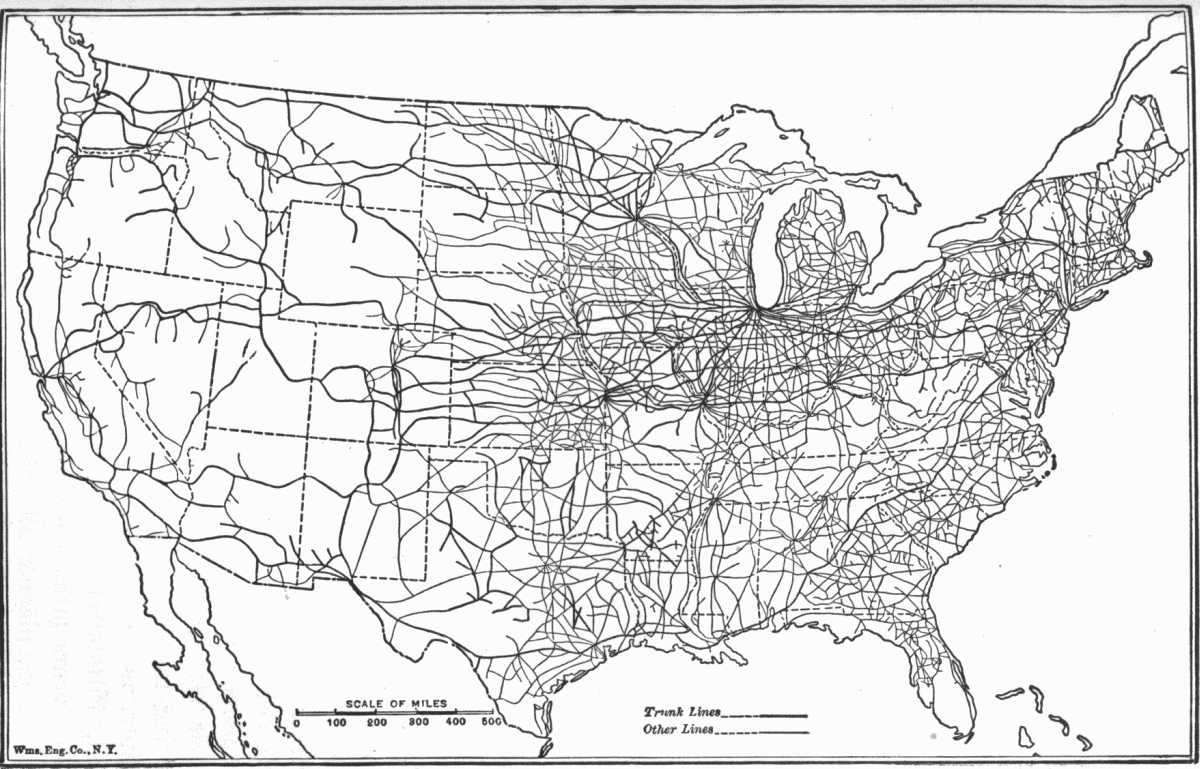
1918 map

There's a 1920's map somewhere that shows Canada too, which demonstrates how heavily the Canadian system is dependent on the American one.

Seriously, the hour hostilities are obvious, Canada and America aren't shipping Europe food any longer. How is the invasion force getting fed?
User avatar
wautd
Emperor's Hand
Posts: 7606
Joined: 2004-02-11 10:11am
Location: Intensive care

Post by wautd »

Sidewinder wrote:Sorry if this is off-topic, but shouldn't such threads include a poll so we can determine which side is more likely to be victorious? (So far, it seems like the US can defeat such a European invasion force, due to the ease at which likely invasion routes can be defended.)
A poll doesn't really proove anything but I'll see what I can do
User avatar
K. A. Pital
Glamorous Commie
Posts: 20814
Joined: 2003-02-26 11:39am
Location: Elysium

Post by K. A. Pital »

Seriously, the hour hostilities are obvious, Canada and America aren't shipping Europe food any longer. How is the invasion force getting fed?
And how much do those constitute in the Empire's food imports?
Lì ci sono chiese, macerie, moschee e questure, lì frontiere, prezzi inaccessibile e freddure
Lì paludi, minacce, cecchini coi fucili, documenti, file notturne e clandestini
Qui incontri, lotte, passi sincronizzati, colori, capannelli non autorizzati,
Uccelli migratori, reti, informazioni, piazze di Tutti i like pazze di passioni...

...La tranquillità è importante ma la libertà è tutto!
Assalti Frontali
User avatar
The_Saint
Jedi Knight
Posts: 798
Joined: 2007-05-05 04:13am
Location: Under Down Under

Post by The_Saint »

Someone mentioned forcing from the West coast heading East.. pass through I think this was a similar concept to what I was thinking of when I mentioned putting a desert mounted corps in Mexico to raid up through the mid-west.

Whoever mentioned the armoured train has got me scratching my head what they think an armoured train is going to do to cavalry/mounted infantry raiding parties.

Actually being part of a lighthorse historical unit I have to say.. if there's a choice between US mid west and the middle east they'd both suck.. particuarly due to the heavy wool tunics that were standard issue of the time.. no wonder the Australians had a bad habit of personalising kit 8)
All people are equal but some people are more equal than others.
User avatar
The Duchess of Zeon
Gözde
Posts: 14566
Joined: 2002-09-18 01:06am
Location: Exiled in the Pale of Settlement.

Post by The Duchess of Zeon »

The_Saint wrote:
Whoever mentioned the armoured train has got me scratching my head what they think an armoured train is going to do to cavalry/mounted infantry raiding parties.

)
Decimate them with machine-gun fire when they try to cross railroad tracks. They'll also be able to keep the railroad lines open by repairing any damage done to the track, and they can be used to break open any ambushes laid.

They're really incredibly effective in this period in any kind of mobile warfare, look at the massive employment of them in the Russian Civil War, and they would be incredibly useful on the long western transcons in the southwest against raiders from Mexico. They would of course be supported by Indian scouts armed and let off the reservations (most Indians eagerly supported the USA in WW1 and fought in our regular units, here they would have an even more useful purpose) and local mounted militias.
The threshold for inclusion in Wikipedia is verifiability, not truth. -- Wikipedia's No Original Research policy page.

In 1966 the Soviets find something on the dark side of the Moon. In 2104 they come back. -- Red Banner / White Star, a nBSG continuation story. Updated to Chapter 4.0 -- 14 January 2013.
CC
Youngling
Posts: 144
Joined: 2005-08-10 02:54pm

Post by CC »

Stas Bush wrote:
Coast watchers are about all that's necessary.
They only offer immediate warning. That's what I was talking about. There can be little reaction time if the enemy launches a fast attack on the ground.
Immediate warning that gives several hours for forces to react. Landings at this period of time are very slow. Even longer if they have to look at the coast and such prior to landing.
Most likely, if you do a series of large landings, you're landing to fight.
Yes, but you want to avoid landing right next to large concentrations of enemy troops. That's the entire idea behind amphibious assaults, hitting the enemy where is defenses are not.
And you can use your ships - the naval edge comes handy here - as support for your troops.
Not with any great deal of effectiveness in this time period. Accurate naval gunfire support was a WWII invention.
So? Who knows where these troops are going, new garrisons to Canada or a landing somewhere on the East Coast? Wink
Transatlantic Gallipolis are a no-go. Simply too far for you to travel. You'd have to build up in Canada, Mexico, or Cuba first.
Of course they will, that's the standard modus operandi. The question is, since your fleet is a sitting duck, your ports are mined both ways and you don't take the battle, would immediate-reporting be enough? The fleets will come in a few hours and have the troops in place with heavy artillery support from their guns. The next few hours you will have a battle between forces immediately available in the area and the landing force.
Like has been mentioned, naval gunfire support isn't going to be very effective. Meanwhile, immediate forces should be more than enough as it'll just be light infantry unloading, easy enough for local militia to pin down until American regulars, with heavy artillery, arrive.
And how much do those constitute in the Empire's food imports?
It's not so much where they buy them from, but the fact that prices will skyrocket since over half of the world grain supply is now off the market.
User avatar
K. A. Pital
Glamorous Commie
Posts: 20814
Joined: 2003-02-26 11:39am
Location: Elysium

Post by K. A. Pital »

It's not so much where they buy them from, but the fact that prices will skyrocket since over half of the world grain supply is now off the market.
War mobilization knows how to deal with that, or?

As for the rest (ships and landings), I agree with your and Skimmer's arguments.
Lì ci sono chiese, macerie, moschee e questure, lì frontiere, prezzi inaccessibile e freddure
Lì paludi, minacce, cecchini coi fucili, documenti, file notturne e clandestini
Qui incontri, lotte, passi sincronizzati, colori, capannelli non autorizzati,
Uccelli migratori, reti, informazioni, piazze di Tutti i like pazze di passioni...

...La tranquillità è importante ma la libertà è tutto!
Assalti Frontali
Post Reply