INGINGINGING)!!!!!!!!!!!!
my sistor is a NUERS in the OPERATING ROOM and she was asking me if i knew someones who could translates these statementses for patients who can't speak engrishes
into thanasian, japanomonipponomohippopotamunimunimango, and zenobian (germang japanese and russki)
GOVORITE PO RUSSKI
DA
the statements is
(in form format)
ARE YOU WEARING/HAVE: (please check all that apply)
- DENTURES
-CONTACT LENS
-UNDERWEAR
-ORTHOPEDIC IMPLANTS
-PACEMAKER
DO YOU HAVE ALLERGIES TO MEDICATION/FOOD?
ARE YOU: (please check all that apply)
-PREGNANT
-IN PAIN, (PLEASE RATE WITH 0 FOR NO PAIN and 10 FOR VERY PAINFUL)
-HAVE DIFFICULTY IN BREATHING
-FEELING COLD
also my sistor was asking how to say
"We will take care of you"
"You won't feel anything during operation because there is anesthesia"
"I am nurse"
"This is surgeon"
"This is anesthesiologist"
"Wake up"
STAS BUSH STAS BUSH STAS BUSH
Stickied and changed title to generic, we'll see how this works -- SHEEPLES
Translation Request Sticky
Moderator: Edi
-
Shroom Man 777

- FUCKING DICK-STABBER!
- Posts: 21222
- Joined: 2003-05-11 08:39am
- Location: Bleeding breasts and stabbing dicks since 2003
- Contact:
Translation Request Sticky
 "DO YOU WORSHIP HOMOSEXUALS?" - Curtis Saxton (source)
shroom is a lovely boy and i wont hear a bad word against him - LUSY-CHAN!
Shit! Man, I didn't think of that! It took Shroom to properly interpret the screams of dying people
 - PeZook
Shroom, I read out the stuff you write about us. You are an endless supply of morale down here. :p - an OWS street medic
Pink Sugar Heart Attack!
-
starslayer

- Jedi Knight
- Posts: 731
- Joined: 2008-04-04 08:40pm
- Location: Columbus, OH
Re: ATTN DUCKIES THANASES LUSYCHANS & STAS BUSH (TRANSLATION
I can help a little with the Russian (I think, anyway, I'm rusty). When there could be gender ambiguity, male is first, then female.
"I am a nurse." -> "Я медбрат/медсестра."
"This is the surgeon." -> "Он хирург"/"Она хирурга."
"This is the anesthesiologist." -> "Он анестезиолог"/"Она анестезиолога."
"Wake up." -> "Проснитесь."
I'll leave the more formal language to Stas or fgalkin.
"I am a nurse." -> "Я медбрат/медсестра."
"This is the surgeon." -> "Он хирург"/"Она хирурга."
"This is the anesthesiologist." -> "Он анестезиолог"/"Она анестезиолога."
"Wake up." -> "Проснитесь."
I'll leave the more formal language to Stas or fgalkin.
-
LaCroix
- Sith Acolyte
- Posts: 5196
- Joined: 2004-12-21 12:14pm
- Location: Sopron District, Hungary, Europe, Terra
Re: ATTN DUCKIES THANASES LUSYCHANS & STAS BUSH (TRANSLATION
Thanasian
Tragen Sie/ Haben Sie (bitte kreuzen Sie alles zutreffende an)
-Zahnersatz (Dritte)
-Kontaktlinsen
-Unterwäsche
-Orthopädische Implantate
-Herzschrittmacher?
Sind Sie allergisch gegen Nahrungsmittel/Medikamente?
Sind Sie/Haben Sie: (bitte kreuzen Sie alles zutreffende an)
-Schwanger
-Schmerzen, (Bitte bewerten Sie dies mit 0 für keine Schmerzen bis 10 für starke Schmerzen)
-Schwierigkeiten zu Atmen?
-Kältegefühl
"We will take care of you" - Wir werden uns um Sie kümmern
"You won't feel anything during operation because there is anesthesia"
-Sie werden von der Operation nichts spüren, Sie bekommen eine Betäubung.
"I am nurse" - Ich bin Krankenschwester
"This is surgeon" - Das ist der Chirurg.
"This is anesthesiologist" - Das ist der Anaesthesist.
"Wake up" - Aufwachen.
Tragen Sie/ Haben Sie (bitte kreuzen Sie alles zutreffende an)
-Zahnersatz (Dritte)
-Kontaktlinsen
-Unterwäsche
-Orthopädische Implantate
-Herzschrittmacher?
Sind Sie allergisch gegen Nahrungsmittel/Medikamente?
Sind Sie/Haben Sie: (bitte kreuzen Sie alles zutreffende an)
-Schwanger
-Schmerzen, (Bitte bewerten Sie dies mit 0 für keine Schmerzen bis 10 für starke Schmerzen)
-Schwierigkeiten zu Atmen?
-Kältegefühl
"We will take care of you" - Wir werden uns um Sie kümmern
"You won't feel anything during operation because there is anesthesia"
-Sie werden von der Operation nichts spüren, Sie bekommen eine Betäubung.
"I am nurse" - Ich bin Krankenschwester
"This is surgeon" - Das ist der Chirurg.
"This is anesthesiologist" - Das ist der Anaesthesist.
"Wake up" - Aufwachen.
A minute's thought suggests that the very idea of this is stupid. A more detailed examination raises the possibility that it might be an answer to the question "how could the Germans win the war after the US gets involved?" - Captain Seafort, in a thread proposing a 1942 'D-Day' in Quiberon Bay
I do archery skeet. With a Trebuchet.
I do archery skeet. With a Trebuchet.
-
Kryten

- Youngling
- Posts: 80
- Joined: 2009-10-22 03:54pm
- Location: Yorkshire
Re: ATTN DUCKIES THANASES LUSYCHANS & STAS BUSH (TRANSLATION
Shroom probably wanted this to use himself-in which case it's Ich bin Krankenpfleger.LaCroix wrote: "I am nurse" - Krankenschwester
-
Zixinus

- Emperor's Hand
- Posts: 6663
- Joined: 2007-06-19 12:48pm
- Location: In Seth the Blitzspear
- Contact:
Re: ATTN DUCKIES THANASES LUSYCHANS & STAS BUSH (TRANSLATION
Would a Hungarian translation be welcome too?
EDIT: Fuck it, here it is. I have no idea how to help with pronunciation except contacting me.
ARE YOU WEARING/HAVE: (please check all that apply) // VAN-E ÖNÖN/VISEL-E: (jelölje mindet ami igaz Önre)
- DENTURES // FOGSZABÁLYZÓT
-CONTACT LENS // KONTAKTLENCSÉT
-UNDERWEAR // FEHÉRNEMÜT*
-ORTHOPEDIC IMPLANTS // ORTOPÉD PROTÉZIST**
-PACEMAKER // SZÍVRITMUS-SZABÁLYOZÓT***
DO YOU HAVE ALLERGIES TO MEDICATION/FOOD? // VAN ÉTEL VAGY GYÓGYSZER ALLERGIÁJA?
ARE YOU: (please check all that apply) // ÖN (kérem jelölje be mident ami igaz önre)
-PREGNANT // TERHES
-IN PAIN, (PLEASE RATE WITH 0 FOR NO PAIN and 10 FOR VERY PAINFUL) // FÁJDALOMBAN SZENVED (KÉREM HASZNÁLJON 10-ES SKÁLÁT, 0-NÁL "NINCS FÁJDALOM" ÉS 10-NÉL "NAGYON FÁJDALMAS)
-HAVE DIFFICULTY IN BREATHING // NEHEZEN LÉLEGZIK
-FEELING COLD // FÁZIK
"We will take care of you" // "Segitünk Önnek."
"You won't feel anything during operation because there is anesthesia" // "Érzéstelenités miatt nem fog érezni semmit".
"I am nurse" // "Nővér vagyok."
"This is surgeon" // "Ez egy sebész."
"This is anesthesiologist" // "Ez egy érzéstelenitő orvos."
"Wake up" // "Ébredjen fel!"
*Refers to underwear by type, including undershirts and stockings. Noting this if there might be any confusion.
**Refers specifically to heart rate-regulator (I am guessing that is what a pacemaker essentially is?). Might not cover other heart implants.
*** This refers to prosthesis in particular, this was the only term I could find.
EDIT: Fuck it, here it is. I have no idea how to help with pronunciation except contacting me.
ARE YOU WEARING/HAVE: (please check all that apply) // VAN-E ÖNÖN/VISEL-E: (jelölje mindet ami igaz Önre)
- DENTURES // FOGSZABÁLYZÓT
-CONTACT LENS // KONTAKTLENCSÉT
-UNDERWEAR // FEHÉRNEMÜT*
-ORTHOPEDIC IMPLANTS // ORTOPÉD PROTÉZIST**
-PACEMAKER // SZÍVRITMUS-SZABÁLYOZÓT***
DO YOU HAVE ALLERGIES TO MEDICATION/FOOD? // VAN ÉTEL VAGY GYÓGYSZER ALLERGIÁJA?
ARE YOU: (please check all that apply) // ÖN (kérem jelölje be mident ami igaz önre)
-PREGNANT // TERHES
-IN PAIN, (PLEASE RATE WITH 0 FOR NO PAIN and 10 FOR VERY PAINFUL) // FÁJDALOMBAN SZENVED (KÉREM HASZNÁLJON 10-ES SKÁLÁT, 0-NÁL "NINCS FÁJDALOM" ÉS 10-NÉL "NAGYON FÁJDALMAS)
-HAVE DIFFICULTY IN BREATHING // NEHEZEN LÉLEGZIK
-FEELING COLD // FÁZIK
"We will take care of you" // "Segitünk Önnek."
"You won't feel anything during operation because there is anesthesia" // "Érzéstelenités miatt nem fog érezni semmit".
"I am nurse" // "Nővér vagyok."
"This is surgeon" // "Ez egy sebész."
"This is anesthesiologist" // "Ez egy érzéstelenitő orvos."
"Wake up" // "Ébredjen fel!"
*Refers to underwear by type, including undershirts and stockings. Noting this if there might be any confusion.
**Refers specifically to heart rate-regulator (I am guessing that is what a pacemaker essentially is?). Might not cover other heart implants.
*** This refers to prosthesis in particular, this was the only term I could find.
Last edited by Zixinus on 2012-01-10 11:44am, edited 1 time in total.
Credo!
Chat with me on Skype if you want to talk about writing, ideas or if you want a test-reader! PM for address.
Chat with me on Skype if you want to talk about writing, ideas or if you want a test-reader! PM for address.
-
Duckie
- Sith Marauder
- Posts: 3980
- Joined: 2003-08-28 08:16pm
Re: ATTN DUCKIES THANASES LUSYCHANS & STAS BUSH (TRANSLATION
Shouldn't you be using legitimate medical translator? I suppose the phillipines is kind of a slapdash place, and something is probably better than nothing.
Japanese, very basic but what level I currently have. Polite but not ultra-formal so that the average person can understand. You may sound somewhat like a very formulaic and repetitive girl whose sentences are all unconnected to eachother, but the average person will understand. Where I am unable to say something I have provided a rephrase.
Most Japanese understand English to some degree, so starting off with "Eigo-o hanasemasu?" (Do you understand/are you able to speak English?) would be productive of course. Even crappy english is better than a list of a couple japanese phrases. Even if they don't, many Japanese will understand individual words anyhow".
Since these use different verbs in japanese you can't make a form out of them as easily, but you can present them as individual questions I guess:
"Are you wearing dentures" : "Ireba-o shite-imasu ka?"
"Do you use contact lenses"? : "Kontakuto-Renzu-o tsukatte-imasu ka?"
"Are you wearing underwear?" : "Shitagi-o haite-imasu ka?"
"Do you have a pacemaker?" : "Shinzou-Peisumeikaa-o shite-imasu ka?". Speculative. Might be the wrong word. Worst come to worst, point at their chest and say 'Shinzou-Peisumeikaa?"
Do you have (things like) medicine-allergies or food-allergies? : "Yakubutsu-arerugii-ya shokumotsu-arerugii-ga arimasu ka?"
Are you pregnant? > Have you conceived/Are you with child?. I admit I have no idea how to say this most important question. Two possible things are: "Ninshin desu ka?" "Ko-o yadoshimasu ka?". If both get a yes that's a definite.
Does it hurt? Please say a number. Zero does not hurt, Ten really hurts. (One two three four five six seven eight nine ten) : "Itai desu ka? Nambaa-o itte-kudasai. Zero-wa itakunai. Juu-wa chou-itai desu." (Zero, Ichi, Ni, San, Yon or Shi, Go, Roku, Nana/Shichi, Kyuu, Juu). This will probably not work as the sentences are disconnected and not particularly logical seeming. Worth a shot though, as they might get the idea. Replace 'itte-kudasai' with 'kaite-kudasai' for writing I guess since I just realized it's for a form.
"Are you having difficult breathing (defective breathing)?" : "Kata-iki desu ka?"
"Do you feel cold?" > "Does your body feel cold"? : "Karada-ga tsumetai desu ka?"
"We will take care of you" > "We will give you aid" : "Watashitachi-wa o-sewa-o shimasu"
"You won't feel anything during operation because there is anaesthesia" > "The procedure will not hurt. We have anaesthesia." : "Shujutsu-ga itakunai desu. Masui-ga arimasu." If you wish to specify, Full body/general anaesthesia is Zenshin-Masui, and Local is Kyokusho-Masui or Kyokubu-Masui
"I am a (registered) nurse" : "Watashi-wa kangoshi desu."
"This person is a surgical doctor" : "Kono hito-wa Gekai desu"
"This person is an anesthesiologist" : "Kono hito-wa Masuikai desu"
"Wake up" : "Okite-kudasai."
Pronunciation: Remember to say every vowel- even when not hyphenated, 'ai' is pronounced 'ah-ee', not english 'igh', and 'ui' is 'oo-ee', not 'wi'. Ignore 1
Vowels: a, e, i, o, u are pronounuced like italian or spanish or anything. aa, ei, ii, ou, uu are the same vowel but longer, except where hyphenated (such as 'shite-imasu', which is an e followed by an i and not a long e. Other hyphens are for grammatical reasons and can be absolutely ignored.
Japanese, very basic but what level I currently have. Polite but not ultra-formal so that the average person can understand. You may sound somewhat like a very formulaic and repetitive girl whose sentences are all unconnected to eachother, but the average person will understand. Where I am unable to say something I have provided a rephrase.
Most Japanese understand English to some degree, so starting off with "Eigo-o hanasemasu?" (Do you understand/are you able to speak English?) would be productive of course. Even crappy english is better than a list of a couple japanese phrases. Even if they don't, many Japanese will understand individual words anyhow".
Since these use different verbs in japanese you can't make a form out of them as easily, but you can present them as individual questions I guess:
"Are you wearing dentures" : "Ireba-o shite-imasu ka?"
"Do you use contact lenses"? : "Kontakuto-Renzu-o tsukatte-imasu ka?"
"Are you wearing underwear?" : "Shitagi-o haite-imasu ka?"
"Do you have a pacemaker?" : "Shinzou-Peisumeikaa-o shite-imasu ka?". Speculative. Might be the wrong word. Worst come to worst, point at their chest and say 'Shinzou-Peisumeikaa?"
Do you have (things like) medicine-allergies or food-allergies? : "Yakubutsu-arerugii-ya shokumotsu-arerugii-ga arimasu ka?"
Are you pregnant? > Have you conceived/Are you with child?. I admit I have no idea how to say this most important question. Two possible things are: "Ninshin desu ka?" "Ko-o yadoshimasu ka?". If both get a yes that's a definite.
Does it hurt? Please say a number. Zero does not hurt, Ten really hurts. (One two three four five six seven eight nine ten) : "Itai desu ka? Nambaa-o itte-kudasai. Zero-wa itakunai. Juu-wa chou-itai desu." (Zero, Ichi, Ni, San, Yon or Shi, Go, Roku, Nana/Shichi, Kyuu, Juu). This will probably not work as the sentences are disconnected and not particularly logical seeming. Worth a shot though, as they might get the idea. Replace 'itte-kudasai' with 'kaite-kudasai' for writing I guess since I just realized it's for a form.
"Are you having difficult breathing (defective breathing)?" : "Kata-iki desu ka?"
"Do you feel cold?" > "Does your body feel cold"? : "Karada-ga tsumetai desu ka?"
"We will take care of you" > "We will give you aid" : "Watashitachi-wa o-sewa-o shimasu"
"You won't feel anything during operation because there is anaesthesia" > "The procedure will not hurt. We have anaesthesia." : "Shujutsu-ga itakunai desu. Masui-ga arimasu." If you wish to specify, Full body/general anaesthesia is Zenshin-Masui, and Local is Kyokusho-Masui or Kyokubu-Masui
"I am a (registered) nurse" : "Watashi-wa kangoshi desu."
"This person is a surgical doctor" : "Kono hito-wa Gekai desu"
"This person is an anesthesiologist" : "Kono hito-wa Masuikai desu"
"Wake up" : "Okite-kudasai."
Pronunciation: Remember to say every vowel- even when not hyphenated, 'ai' is pronounced 'ah-ee', not english 'igh', and 'ui' is 'oo-ee', not 'wi'. Ignore 1
Vowels: a, e, i, o, u are pronounuced like italian or spanish or anything. aa, ei, ii, ou, uu are the same vowel but longer, except where hyphenated (such as 'shite-imasu', which is an e followed by an i and not a long e. Other hyphens are for grammatical reasons and can be absolutely ignored.
Last edited by Duckie on 2012-01-09 06:58am, edited 1 time in total.
-
Shroom Man 777
- FUCKING DICK-STABBER!
- Posts: 21222
- Joined: 2003-05-11 08:39am
- Location: Bleeding breasts and stabbing dicks since 2003
- Contact:
Re: ATTN DUCKIES THANASES LUSYCHANS & STAS BUSH (TRANSLATION
Thank you guys
The hostipal probably has a medical translator, since it's a fancy place. My sistor just wants something for flash cards or for notes to give herself an easier time when interacting with gaijin patientes.Duckie wrote:Shouldn't you be using legitimate medical translator? I suppose the phillipines is kind of a slapdash place, and something is probably better than nothing.
"DO YOU WORSHIP HOMOSEXUALS?" - Curtis Saxton (source)shroom is a lovely boy and i wont hear a bad word against him - LUSY-CHAN!
Shit! Man, I didn't think of that! It took Shroom to properly interpret the screams of dying people
- PeZookShroom, I read out the stuff you write about us. You are an endless supply of morale down here. :p - an OWS street medic
Pink Sugar Heart Attack!
-
Shroom Man 777
- FUCKING DICK-STABBER!
- Posts: 21222
- Joined: 2003-05-11 08:39am
- Location: Bleeding breasts and stabbing dicks since 2003
- Contact:
Re: ATTN DUCKIES THANASES LUSYCHANS & STAS BUSH (TRANSLATION
Could you also give me phoneticizations of that with the normal alphabet letter translations/pronunciations that are not in Cyrillic?starslayer wrote:I can help a little with the Russian (I think, anyway, I'm rusty). When there could be gender ambiguity, male is first, then female.
"I am a nurse." -> "Я медбрат/медсестра."
"This is the surgeon." -> "Он хирург"/"Она хирурга."
"This is the anesthesiologist." -> "Он анестезиолог"/"Она анестезиолога."
"Wake up." -> "Проснитесь."
I'll leave the more formal language to Stas or fgalkin.
"DO YOU WORSHIP HOMOSEXUALS?" - Curtis Saxton (source)shroom is a lovely boy and i wont hear a bad word against him - LUSY-CHAN!
Shit! Man, I didn't think of that! It took Shroom to properly interpret the screams of dying people
- PeZookShroom, I read out the stuff you write about us. You are an endless supply of morale down here. :p - an OWS street medic
Pink Sugar Heart Attack!
-
Duckie
- Sith Marauder
- Posts: 3980
- Joined: 2003-08-28 08:16pm
Re: ATTN DUCKIES THANASES LUSYCHANS & STAS BUSH (TRANSLATION
Oh, and how to write these, if you need them. I have made a few corrections, which I have edited into the prior post as well:
"Ireba-o shite-imasu ka?" 入れ歯をしていますか
"Kontakuto-Renzu-o tsukatte-imasu ka?" コンタクトレンズを使っていますか
"Shitagi-o haite-imasu ka?" 下着をはいていますか
"Shinzou-Peisumeikaa-o shite-imasu ka?". 心臓ペースメーカーをしていますか
"Yakubutsu-arerugii-ya shokumotsu-arerugii-ga arimasu ka?" 薬物アレルギーや食物アレルギーがありますか
"Ninshin desu ka?" 妊娠ですか
"Ko-o yadoshimasu ka?" 子を宿しますか
"Itai desu ka? Nambaa-o itte-kudasai. Zero-wa itakunai. Juu-wa chou-itai desu." 痛いですか?ナンバーを言ってください。ゼロは痛くない。10はチョウ痛いです。 replace 言って with 書いて to make it 'write', as I said above.
"Kata-iki desu ka?" 片息ですか
"Karada-ga tsumetai desu ka?" 体が冷たいですか
"Watashitachi-wa o-sewa-o shimasu" 私達はお世話をします
"Shujutsu-ga itakunai desu. Masui-ga arimasu." 手術が痛くないです。麻酔があります。 zenshin masui 全身麻酔 and kyokusho-masui/kyokubu-masui 局所麻酔/局部麻酔
"Watashi-wa kangoshi desu." 私は看護師です
"Kono hito-wa Gekai desu" この人は外科医です
"Kono hito-wa Masuikai desu" この人は麻酔科医です
"Okite-kudasai." 起きて下さい
"Ireba-o shite-imasu ka?" 入れ歯をしていますか
"Kontakuto-Renzu-o tsukatte-imasu ka?" コンタクトレンズを使っていますか
"Shitagi-o haite-imasu ka?" 下着をはいていますか
"Shinzou-Peisumeikaa-o shite-imasu ka?". 心臓ペースメーカーをしていますか
"Yakubutsu-arerugii-ya shokumotsu-arerugii-ga arimasu ka?" 薬物アレルギーや食物アレルギーがありますか
"Ninshin desu ka?" 妊娠ですか
"Ko-o yadoshimasu ka?" 子を宿しますか
"Itai desu ka? Nambaa-o itte-kudasai. Zero-wa itakunai. Juu-wa chou-itai desu." 痛いですか?ナンバーを言ってください。ゼロは痛くない。10はチョウ痛いです。 replace 言って with 書いて to make it 'write', as I said above.
"Kata-iki desu ka?" 片息ですか
"Karada-ga tsumetai desu ka?" 体が冷たいですか
"Watashitachi-wa o-sewa-o shimasu" 私達はお世話をします
"Shujutsu-ga itakunai desu. Masui-ga arimasu." 手術が痛くないです。麻酔があります。 zenshin masui 全身麻酔 and kyokusho-masui/kyokubu-masui 局所麻酔/局部麻酔
"Watashi-wa kangoshi desu." 私は看護師です
"Kono hito-wa Gekai desu" この人は外科医です
"Kono hito-wa Masuikai desu" この人は麻酔科医です
"Okite-kudasai." 起きて下さい
-
Shroom Man 777
- FUCKING DICK-STABBER!
- Posts: 21222
- Joined: 2003-05-11 08:39am
- Location: Bleeding breasts and stabbing dicks since 2003
- Contact:
Re: ATTN DUCKIES THANASES LUSYCHANS & STAS BUSH (TRANSLATION
thank you duckies, you are ever so gracious
QUACK QUACK QUACK
thank you also zixinus and your lovely cultivated hungarian mustachio
kryten and lacroix for your stern unfeeling cold germanian engineering of languages
and starslayer for your govorite po russkiing
you are great peoples
QUACK QUACK QUACK
thank you also zixinus and your lovely cultivated hungarian mustachio
kryten and lacroix for your stern unfeeling cold germanian engineering of languages
and starslayer for your govorite po russkiing
you are great peoples
"DO YOU WORSHIP HOMOSEXUALS?" - Curtis Saxton (source)shroom is a lovely boy and i wont hear a bad word against him - LUSY-CHAN!
Shit! Man, I didn't think of that! It took Shroom to properly interpret the screams of dying people
- PeZookShroom, I read out the stuff you write about us. You are an endless supply of morale down here. :p - an OWS street medic
Pink Sugar Heart Attack!
-
Gandalf

- SD.net White Wizard
- Posts: 16383
- Joined: 2002-09-16 11:13pm
- Location: A video store in Australia
Re: ATTN DUCKIES THANASES LUSYCHANS & STAS BUSH (TRANSLATION
For this is, you need to use ehto as opposed to on/ona. Unless it's a colloquial thing nobody showed me.starslayer wrote:"This is the surgeon." -> "Он хирург"/"Она хирурга."
"This is the anesthesiologist." -> "Он анестезиолог"/"Она анестезиолога."
"Oh no, oh yeah, tell me how can it be so fair
That we dying younger hiding from the police man over there
Just for breathing in the air they wanna leave me in the chair
Electric shocking body rocking beat streeting me to death"
- A.B. Original, Report to the Mist
"I think it’s the duty of the comedian to find out where the line is drawn and cross it deliberately."
- George Carlin
That we dying younger hiding from the police man over there
Just for breathing in the air they wanna leave me in the chair
Electric shocking body rocking beat streeting me to death"
- A.B. Original, Report to the Mist
"I think it’s the duty of the comedian to find out where the line is drawn and cross it deliberately."
- George Carlin
-
starslayer
- Jedi Knight
- Posts: 731
- Joined: 2008-04-04 08:40pm
- Location: Columbus, OH
Re: ATTN DUCKIES THANASES LUSYCHANS & STAS BUSH (TRANSLATION
If you're referring to someone who's right there, I remember being taught to use the third person pronoun in place of это, though some quick Googling shows me that I'm just misremembering and should brush up on my basic Russian. Shroom, the corrected versions are below.
"I am a nurse." -> "Я медбрат/медсестра." = Ya medbraht/medcestrah.
"This is the surgeon." -> "Это хирург/хирурга." = Etuh kheeroorg/kheeroorguh.
"This is the anesthesiologist." -> "Это анестезиолог/анестезиолога." = Etuh ahnesteziohluhg/anesteziohluhguh.
"Wake up." -> "Проснитесь." = Prahsneetyeis'.
Sure, no problem. The stressed syllabel is bolded in the transliterations. Pronounce the vowels as if you were an American.Shroom wrote:Could you also give me phoneticizations of that with the normal alphabet letter translations/pronunciations that are not in Cyrillic?
"I am a nurse." -> "Я медбрат/медсестра." = Ya medbraht/medcestrah.
"This is the surgeon." -> "Это хирург/хирурга." = Etuh kheeroorg/kheeroorguh.
"This is the anesthesiologist." -> "Это анестезиолог/анестезиолога." = Etuh ahnesteziohluhg/anesteziohluhguh.
"Wake up." -> "Проснитесь." = Prahsneetyeis'.
-
Shroom Man 777
- FUCKING DICK-STABBER!
- Posts: 21222
- Joined: 2003-05-11 08:39am
- Location: Bleeding breasts and stabbing dicks since 2003
- Contact:
Re: ATTN DUCKIES THANASES LUSYCHANS & STAS BUSH (TRANSLATION
can i axe someones to sticky this threads (in a similar vein to thanas' australia thread) because i might later on go I WOULD LEIK TO LEARN MOAR?
"DO YOU WORSHIP HOMOSEXUALS?" - Curtis Saxton (source)shroom is a lovely boy and i wont hear a bad word against him - LUSY-CHAN!
Shit! Man, I didn't think of that! It took Shroom to properly interpret the screams of dying people
- PeZookShroom, I read out the stuff you write about us. You are an endless supply of morale down here. :p - an OWS street medic
Pink Sugar Heart Attack!
-
Shroom Man 777
- FUCKING DICK-STABBER!
- Posts: 21222
- Joined: 2003-05-11 08:39am
- Location: Bleeding breasts and stabbing dicks since 2003
- Contact:
Re: Translation Request Sticky
thank you SHEPPLES
"DO YOU WORSHIP HOMOSEXUALS?" - Curtis Saxton (source)shroom is a lovely boy and i wont hear a bad word against him - LUSY-CHAN!
Shit! Man, I didn't think of that! It took Shroom to properly interpret the screams of dying people
- PeZookShroom, I read out the stuff you write about us. You are an endless supply of morale down here. :p - an OWS street medic
Pink Sugar Heart Attack!
-
K. A. Pital

- Glamorous Commie
- Posts: 20814
- Joined: 2003-02-26 11:39am
- Location: Elysium
Re: Translation Request Sticky
I'll correct.
"I am a nurse." -> "Я медбрат/медсестра." = Ya medbraht/medsestrah. (male-female correspondingly)
"This is the surgeon." -> "Это хирург." = Eto kheeroorg (NO FEMALE GENDER IN ANY CASE!)
"This is the anesthesiologist." -> "Это анестезиолог." = Eto ahnesteziohlog (NO FEMALE GENDER IN ANY CASE!)
"Wake up." -> "Проснитесь." = Prahsneetyeis'.
I'm sorry I haven't had the time to look here.
"I am a nurse." -> "Я медбрат/медсестра." = Ya medbraht/medsestrah. (male-female correspondingly)
"This is the surgeon." -> "Это хирург." = Eto kheeroorg (NO FEMALE GENDER IN ANY CASE!)
"This is the anesthesiologist." -> "Это анестезиолог." = Eto ahnesteziohlog (NO FEMALE GENDER IN ANY CASE!)
"Wake up." -> "Проснитесь." = Prahsneetyeis'.
I'm sorry I haven't had the time to look here.
Lì ci sono chiese, macerie, moschee e questure, lì frontiere, prezzi inaccessibile e freddure
Lì paludi, minacce, cecchini coi fucili, documenti, file notturne e clandestini
Qui incontri, lotte, passi sincronizzati, colori, capannelli non autorizzati,
Uccelli migratori, reti, informazioni, piazze di Tutti i like pazze di passioni...
...La tranquillità è importante ma la libertà è tutto!
Lì paludi, minacce, cecchini coi fucili, documenti, file notturne e clandestini
Qui incontri, lotte, passi sincronizzati, colori, capannelli non autorizzati,
Uccelli migratori, reti, informazioni, piazze di Tutti i like pazze di passioni...
...La tranquillità è importante ma la libertà è tutto!
Assalti Frontali
-
Chardok

- GET THE FUCK OFF MY OBSTACLE!
- Posts: 8488
- Joined: 2003-08-12 09:49am
- Location: San Antonio
Re: Translation Request Sticky
ARE YOU WEARING/HAVE: (please check all that apply) - Bork bork borbork/bork
- DENTURES - Chompen flomp
-CONTACT LENS - seeinblurg
-UNDERWEAR - Crotchengarden
-ORTHOPEDIC IMPLANTS - Fjurken dur herpen smerg
-PACEMAKER - Glurben bumpen
DO YOU HAVE ALLERGIES TO MEDICATION/FOOD? - Bork bork florgen durgen gurg chompen
ARE YOU: (please check all that apply) - Burken sturg (flurg durgen bork bork bork)
-PREGNANT - Jihad
-IN PAIN, (PLEASE RATE WITH 0 FOR NO PAIN and 10 FOR VERY PAINFUL) - Flurgen dorken burg, (glorgen ARG flurg GLOCKENSPIEL)
-HAVE DIFFICULTY IN BREATHING - Flurgen gaspen hurden
-FEELING COLD - brrgen
also my sistor was asking how to say
"We will take care of you" - flurgen bandaid
"You won't feel anything during operation because there is anesthesia" - Gurken snoren
"I am nurse" - borken needlehurten
"This is surgeon" - heeslecootten
"This is anesthesiologist" - dees a snorin machen
"Wake up" - BOO!
- DENTURES - Chompen flomp
-CONTACT LENS - seeinblurg
-UNDERWEAR - Crotchengarden
-ORTHOPEDIC IMPLANTS - Fjurken dur herpen smerg
-PACEMAKER - Glurben bumpen
DO YOU HAVE ALLERGIES TO MEDICATION/FOOD? - Bork bork florgen durgen gurg chompen
ARE YOU: (please check all that apply) - Burken sturg (flurg durgen bork bork bork)
-PREGNANT - Jihad
-IN PAIN, (PLEASE RATE WITH 0 FOR NO PAIN and 10 FOR VERY PAINFUL) - Flurgen dorken burg, (glorgen ARG flurg GLOCKENSPIEL)
-HAVE DIFFICULTY IN BREATHING - Flurgen gaspen hurden
-FEELING COLD - brrgen
also my sistor was asking how to say
"We will take care of you" - flurgen bandaid
"You won't feel anything during operation because there is anesthesia" - Gurken snoren
"I am nurse" - borken needlehurten
"This is surgeon" - heeslecootten
"This is anesthesiologist" - dees a snorin machen
"Wake up" - BOO!

-
Shroom Man 777
- FUCKING DICK-STABBER!
- Posts: 21222
- Joined: 2003-05-11 08:39am
- Location: Bleeding breasts and stabbing dicks since 2003
- Contact:
Re: Translation Request Sticky
I love you man. 
Thanks Stasses!
Thanks Stasses!
"DO YOU WORSHIP HOMOSEXUALS?" - Curtis Saxton (source)shroom is a lovely boy and i wont hear a bad word against him - LUSY-CHAN!
Shit! Man, I didn't think of that! It took Shroom to properly interpret the screams of dying people
- PeZookShroom, I read out the stuff you write about us. You are an endless supply of morale down here. :p - an OWS street medic
Pink Sugar Heart Attack!
-
MKSheppard

- Ruthless Genocidal Warmonger

- Posts: 29877
- Joined: 2002-07-06 06:34pm
Re: Translation Request Sticky
Shroomie, I would suggest you find someone near you who is fluent in RUSSIANOIDISH and then have them sign off on the translations.
...I know that STAS BUSH STAS BUSH STAS BUSH is a russianoid, but....he's a random guy on the INTERNETS. So best to cover your ass with the translations and get a second (signed) opinion; particularly if you are going to use these in a medical field.
...I know that STAS BUSH STAS BUSH STAS BUSH is a russianoid, but....he's a random guy on the INTERNETS. So best to cover your ass with the translations and get a second (signed) opinion; particularly if you are going to use these in a medical field.
"If scientists and inventors who develop disease cures and useful technologies don't get lifetime royalties, I'd like to know what fucking rationale you have for some guy getting lifetime royalties for writing an episode of Full House." - Mike Wong
"The present air situation in the Pacific is entirely the result of fighting a fifth rate air power." - U.S. Navy Memo - 24 July 1944
"The present air situation in the Pacific is entirely the result of fighting a fifth rate air power." - U.S. Navy Memo - 24 July 1944
-
Shroom Man 777
- FUCKING DICK-STABBER!
- Posts: 21222
- Joined: 2003-05-11 08:39am
- Location: Bleeding breasts and stabbing dicks since 2003
- Contact:
Re: Translation Request Sticky
leik i said it's not official hostipal shits is just for my sistors personal use
its no different from her listening to googeltalk roboto-voice pronunciations and trying what she heard to talk to her patientes
its no different from her listening to googeltalk roboto-voice pronunciations and trying what she heard to talk to her patientes
"DO YOU WORSHIP HOMOSEXUALS?" - Curtis Saxton (source)shroom is a lovely boy and i wont hear a bad word against him - LUSY-CHAN!
Shit! Man, I didn't think of that! It took Shroom to properly interpret the screams of dying people
- PeZookShroom, I read out the stuff you write about us. You are an endless supply of morale down here. :p - an OWS street medic
Pink Sugar Heart Attack!
-
Mayabird

- Storytime!
- Posts: 5970
- Joined: 2003-11-26 04:31pm
- Location: IA > GA
Re: Translation Request Sticky
If this is a sticky and genericified, does that mean any dummy (say, me) could wander in and request a translation for any reason? Like wanting to know
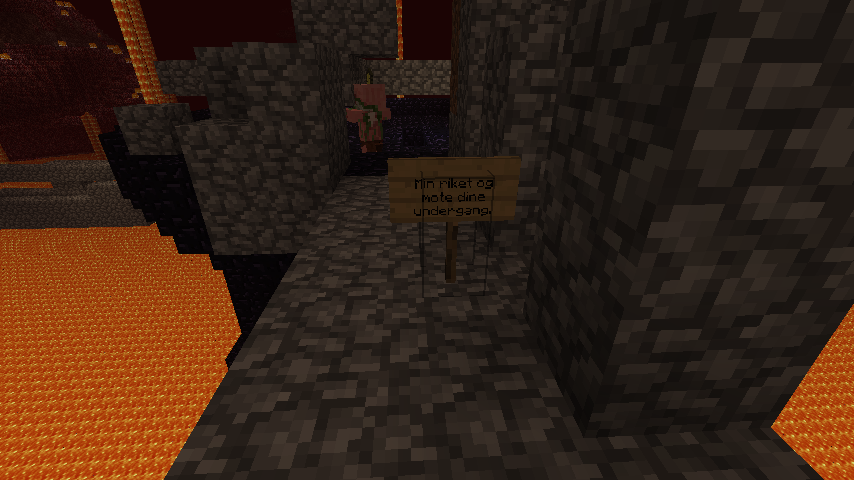
what this means and if it's good...Norwegian?
what this means and if it's good...Norwegian?
DPDarkPrimus is my boyfriend!
SDNW4 Nation: The Refuge And, on Nova Terra, Al-Stan the Totally and Completely Honest and Legitimate Weapons Dealer and Used Starship Salesman slept on a bed made of money, with a blaster under his pillow and his sombrero pulled over his face. This is to say, he slept very well indeed.
SDNW4 Nation: The Refuge And, on Nova Terra, Al-Stan the Totally and Completely Honest and Legitimate Weapons Dealer and Used Starship Salesman slept on a bed made of money, with a blaster under his pillow and his sombrero pulled over his face. This is to say, he slept very well indeed.
-
Thanas

- Magister

- Posts: 30779
- Joined: 2004-06-26 07:49pm
Re: Translation Request Sticky
In this direction, your doom awaits (you). Or at least that is what I can make out of it.
Whoever says "education does not matter" can try ignorance
------------
A decision must be made in the life of every nation at the very moment when the grasp of the enemy is at its throat. Then, it seems that the only way to survive is to use the means of the enemy, to rest survival upon what is expedient, to look the other way. Well, the answer to that is 'survival as what'? A country isn't a rock. It's not an extension of one's self. It's what it stands for. It's what it stands for when standing for something is the most difficult! - Chief Judge Haywood
------------
My LPs
------------
A decision must be made in the life of every nation at the very moment when the grasp of the enemy is at its throat. Then, it seems that the only way to survive is to use the means of the enemy, to rest survival upon what is expedient, to look the other way. Well, the answer to that is 'survival as what'? A country isn't a rock. It's not an extension of one's self. It's what it stands for. It's what it stands for when standing for something is the most difficult! - Chief Judge Haywood
------------
My LPs
-
K. A. Pital
- Glamorous Commie
- Posts: 20814
- Joined: 2003-02-26 11:39am
- Location: Elysium
Re: Translation Request Sticky
Another portion for you Shroom.
ARE YOU WEARING/HAVE: (please check all that apply)
- DENTURES
-CONTACT LENS
-UNDERWEAR
-ORTHOPEDIC IMPLANTS
-PACEMAKER
DO YOU HAVE ALLERGIES TO MEDICATION/FOOD?
ARE YOU: (please check all that apply)
-PREGNANT
-IN PAIN, (PLEASE RATE WITH 0 FOR NO PAIN and 10 FOR VERY PAINFUL)
-HAVE DIFFICULTY IN BREATHING
-FEELING COLD
ЕСТЬ ЛИ У ВАС: (отметьте все подходящее)
- зубные протезы
- контактные линзы
- нижнее белье
- ортопедические имплантаты
- кардиостимулятор
ЕСТЬ ЛИ У ВАС АЛЛЕРГИЯ НА ЛЕКАРСТВА ИЛИ ПИЩЕВАЯ АЛЛЕРГИЯ?
ВАШЕ СОСТОЯНИЕ: (отметьте все подходящее)
- БЕРЕМЕННОСТЬ
- БОЛЬ, УКАЖИТЕ СИЛУ ПО ШКАЛЕ ОТ 0 (НЕТ БОЛИ) ДО 10 (ОЧЕНЬ СИЛЬНАЯ БОЛЬ)
- ЗАТРУДНЕННОЕ ДЫХАНИЕ
- ВАС МОРОЗИТ
You're welcome
ARE YOU WEARING/HAVE: (please check all that apply)
- DENTURES
-CONTACT LENS
-UNDERWEAR
-ORTHOPEDIC IMPLANTS
-PACEMAKER
DO YOU HAVE ALLERGIES TO MEDICATION/FOOD?
ARE YOU: (please check all that apply)
-PREGNANT
-IN PAIN, (PLEASE RATE WITH 0 FOR NO PAIN and 10 FOR VERY PAINFUL)
-HAVE DIFFICULTY IN BREATHING
-FEELING COLD
ЕСТЬ ЛИ У ВАС: (отметьте все подходящее)
- зубные протезы
- контактные линзы
- нижнее белье
- ортопедические имплантаты
- кардиостимулятор
ЕСТЬ ЛИ У ВАС АЛЛЕРГИЯ НА ЛЕКАРСТВА ИЛИ ПИЩЕВАЯ АЛЛЕРГИЯ?
ВАШЕ СОСТОЯНИЕ: (отметьте все подходящее)
- БЕРЕМЕННОСТЬ
- БОЛЬ, УКАЖИТЕ СИЛУ ПО ШКАЛЕ ОТ 0 (НЕТ БОЛИ) ДО 10 (ОЧЕНЬ СИЛЬНАЯ БОЛЬ)
- ЗАТРУДНЕННОЕ ДЫХАНИЕ
- ВАС МОРОЗИТ
You're welcome
Lì ci sono chiese, macerie, moschee e questure, lì frontiere, prezzi inaccessibile e freddure
Lì paludi, minacce, cecchini coi fucili, documenti, file notturne e clandestini
Qui incontri, lotte, passi sincronizzati, colori, capannelli non autorizzati,
Uccelli migratori, reti, informazioni, piazze di Tutti i like pazze di passioni...
...La tranquillità è importante ma la libertà è tutto!
Lì paludi, minacce, cecchini coi fucili, documenti, file notturne e clandestini
Qui incontri, lotte, passi sincronizzati, colori, capannelli non autorizzati,
Uccelli migratori, reti, informazioni, piazze di Tutti i like pazze di passioni...
...La tranquillità è importante ma la libertà è tutto!
Assalti Frontali
-
Shroom Man 777
- FUCKING DICK-STABBER!
- Posts: 21222
- Joined: 2003-05-11 08:39am
- Location: Bleeding breasts and stabbing dicks since 2003
- Contact:
Re: Translation Request Sticky
spasibo tovarischskis
"DO YOU WORSHIP HOMOSEXUALS?" - Curtis Saxton (source)shroom is a lovely boy and i wont hear a bad word against him - LUSY-CHAN!
Shit! Man, I didn't think of that! It took Shroom to properly interpret the screams of dying people
- PeZookShroom, I read out the stuff you write about us. You are an endless supply of morale down here. :p - an OWS street medic
Pink Sugar Heart Attack!
-
Malagar
- Youngling
- Posts: 80
- Joined: 2010-03-08 03:38pm
- Location: Denmark
Re: Translation Request Sticky
Mayabird:
As far as i can see it's:
My realm, and the shape of your doom.
As far as i can see it's:
My realm, and the shape of your doom.
-
Duckie
- Sith Marauder
- Posts: 3980
- Joined: 2003-08-28 08:16pm
Re: Translation Request Sticky
At first I thought it was icelandic, because min timi &c, but determining the meaning is quite easy even without me speaking any non-english germanic language. Let's treat it like it's an unknown germanic language (as it is) and pretend I'm an archaeological linguist and we can reconstruct it.
'min riket' is 'my kingdom', cognate to mein reich or mijn rijk or whatnot. English lost the word rike a while back, replacing it with kingdom (from something like cyningtum)
'dine undergang' is 'your demise', cognate to thine undergoing. English doesn't use that metaphor for downfalls, possibly out of French influence, but it should be obvious to many english speakers nonetheless because of the german movie 'der untergang' ([the] downfall) unless they interpreted that title (as I have heard people do) as 'the group of people underground (in a bunker)' due to an undergang totally making sense in english in that way as a new coining.
'Mote': If I had to guess, I would first assume it's cognate to english 'makes' or german 'macht' via old norse 'makt' (-> mot...-e?), meaning 'causes/power', but that's completely a guess I would say if I were looking at an unknown language. Unfortunately, standard germanic grammar doesn't use a vowel ending for 3rd person singular, it'd be möt if that's even a valid word, so we can rule that out. Mote also could be meeting (cognate with 'meet' or 'moot' as in lawmoot in english- umlaut alternation in germanic is common, consider 'foot' vs 'feet' and 'goose' vs 'geese'), which would make more sense, but mote would thus be a noun unless it's been verbed.
If it's a verb that means 'causes', 'og' would have to be a particle like 'future tense' or a subordinator like 'which', but it isn't because that's not cognate with anything else, so we can assume 'og' means 'and'. It is cognate with one of the words for and in latin, 'ac'. Since 'and' is there, standard germanic syntax would imply there has to be a noun after it, meaning akin to moot is the best option.
That would seem to not make sense as it'd be Noun Possessive Noun, but I guarantee 'dine' is the genitive form of 'you', meaning 'of your', because that's the only thing that fits in germanic syntax in that position. We know this because even without speaking any scandinavian language, we can be pretty confident that german 'dein' is the base form of their pronoun and additions are given for things like female or, in this case, possessive. (At least in germanc languages, having the base be, say, 'deine' and subtracting the vowel is less likely).
This also tells us 'min riket' is non-genitive, as min is the basic form (again with analogy to the icelandic political phase 'min timi something something', the only piece of any scandinavian language I know). Riket however is non-basic. It could be a diminutive, but diminutive -t is more latinate than germanic, at which point I remember that -t is the 'definite' ending in some scandinavian languages, meaning it's a postfixed article akin to english 'the' as I suspected all along. Italians would understand il mio reggio or whatever, but in english we can thus ignore it for translation except to note it's literally 'the my kingdom' or something.
Thus I would translate it as 'the my kingdom and a meet of your doom', and clean that up to proper english as 'my kingdom, and a meeting with your doom'.
Whether it is swedish, danish, or norwegian is unknown to me, but it's definitely scandinavic. At this point I start to cheat a little and look up two words in swedish- downfall and 'and'. Since swedish uses 'och', not 'og' for and because of its innovation away from standard north germanic, and the speaker does not put an å for 'undergang', we can say it's not swedish with some uncertainty as swedes might just be lazy and not write out the å sometimes. But 'og' is a definite teller for west, not east, scandinavian.
But let's go with either norwegian bokmal, norwegian nynorsk, or danish. Since in a short sentence at that point even danes and norwegians might not be sure I am satisfied with that. They might be able to tell by the spelling or usage though, especially on the pronoun. I would guess against Danish and for Norwegian, Bokmal variant if I had to say, for reasons that are too complicated to go into as this post is already getting long.
I can do this without speaking a single word of language because I'm a linguist. Hopefully. Otherwise when a dane or norwegian comes in here and says it means something utterly different I'll look dumb.
(Other fun with languages- if you speak Latin, like Thanas, and have these instincts, you should intuitively understand the hindi insult 'tera maa ki' which I heard on an old episode of House recently. Spoiler
'min riket' is 'my kingdom', cognate to mein reich or mijn rijk or whatnot. English lost the word rike a while back, replacing it with kingdom (from something like cyningtum)
'dine undergang' is 'your demise', cognate to thine undergoing. English doesn't use that metaphor for downfalls, possibly out of French influence, but it should be obvious to many english speakers nonetheless because of the german movie 'der untergang' ([the] downfall) unless they interpreted that title (as I have heard people do) as 'the group of people underground (in a bunker)' due to an undergang totally making sense in english in that way as a new coining.
'Mote': If I had to guess, I would first assume it's cognate to english 'makes' or german 'macht' via old norse 'makt' (-> mot...-e?), meaning 'causes/power', but that's completely a guess I would say if I were looking at an unknown language. Unfortunately, standard germanic grammar doesn't use a vowel ending for 3rd person singular, it'd be möt if that's even a valid word, so we can rule that out. Mote also could be meeting (cognate with 'meet' or 'moot' as in lawmoot in english- umlaut alternation in germanic is common, consider 'foot' vs 'feet' and 'goose' vs 'geese'), which would make more sense, but mote would thus be a noun unless it's been verbed.
If it's a verb that means 'causes', 'og' would have to be a particle like 'future tense' or a subordinator like 'which', but it isn't because that's not cognate with anything else, so we can assume 'og' means 'and'. It is cognate with one of the words for and in latin, 'ac'. Since 'and' is there, standard germanic syntax would imply there has to be a noun after it, meaning akin to moot is the best option.
That would seem to not make sense as it'd be Noun Possessive Noun, but I guarantee 'dine' is the genitive form of 'you', meaning 'of your', because that's the only thing that fits in germanic syntax in that position. We know this because even without speaking any scandinavian language, we can be pretty confident that german 'dein' is the base form of their pronoun and additions are given for things like female or, in this case, possessive. (At least in germanc languages, having the base be, say, 'deine' and subtracting the vowel is less likely).
This also tells us 'min riket' is non-genitive, as min is the basic form (again with analogy to the icelandic political phase 'min timi something something', the only piece of any scandinavian language I know). Riket however is non-basic. It could be a diminutive, but diminutive -t is more latinate than germanic, at which point I remember that -t is the 'definite' ending in some scandinavian languages, meaning it's a postfixed article akin to english 'the' as I suspected all along. Italians would understand il mio reggio or whatever, but in english we can thus ignore it for translation except to note it's literally 'the my kingdom' or something.
Thus I would translate it as 'the my kingdom and a meet of your doom', and clean that up to proper english as 'my kingdom, and a meeting with your doom'.
Whether it is swedish, danish, or norwegian is unknown to me, but it's definitely scandinavic. At this point I start to cheat a little and look up two words in swedish- downfall and 'and'. Since swedish uses 'och', not 'og' for and because of its innovation away from standard north germanic, and the speaker does not put an å for 'undergang', we can say it's not swedish with some uncertainty as swedes might just be lazy and not write out the å sometimes. But 'og' is a definite teller for west, not east, scandinavian.
But let's go with either norwegian bokmal, norwegian nynorsk, or danish. Since in a short sentence at that point even danes and norwegians might not be sure I am satisfied with that. They might be able to tell by the spelling or usage though, especially on the pronoun. I would guess against Danish and for Norwegian, Bokmal variant if I had to say, for reasons that are too complicated to go into as this post is already getting long.
I can do this without speaking a single word of language because I'm a linguist. Hopefully. Otherwise when a dane or norwegian comes in here and says it means something utterly different I'll look dumb.
(Other fun with languages- if you speak Latin, like Thanas, and have these instincts, you should intuitively understand the hindi insult 'tera maa ki' which I heard on an old episode of House recently. Spoiler
Spoiler
Last edited by Duckie on 2012-01-16 01:49pm, edited 3 times in total.